
Views: 0 Author: Site Editor Publish Time: 2026-09-21 Origin: Site


Buyers at the specification stage often prioritize finish and backplate design. They frequently overlook the functional impact of the grip shape itself. You might spend hours selecting the perfect brushed patina or minimalist rosette. However, ignoring the physical contour of the lever invites long-term problems. Choosing the wrong grip shape leads to daily ergonomic friction. It creates potential accessibility compliance failures in commercial spaces. Furthermore, a mismatched profile accelerates uneven finish wear over time.
Poorly designed handles frustrate users and degrade the overall spatial experience. We built this standardized evaluation framework to solve these exact challenges. This comprehensive guide will help you confidently align grip shape with your specific architectural intent. You will learn how to balance tactile expectations against rigorous structural requirements. By understanding these core principles, you can eliminate snag hazards, ensure regulatory compliance, and elevate the daily interaction your users have at every doorway.
Treating lever grips purely as aesthetic choices invites significant downstream problems. Many architects select hardware based on visual renders alone. They forget how human hands interact daily. You might face costly hardware replacements shortly after handover. You could even encounter strict safety violations during municipal inspections. Facility managers often realize their mistake only after installation. This late realization forces an expensive, disruptive retrofit.
Usability relies heavily on the physical effort required to actuate the latch. An improperly contoured handle causes distinct hand fatigue. Elderly users and individuals facing physical disabilities struggle significantly. We must carefully consider how human hands naturally operate levers. The palm prefers broad, flat resting surfaces. Fingers require adequate space behind the lever body. Hardware should respond effortlessly to a simple downward push.
Open-ended straight levers create a notorious snag hazard. They frequently catch on clothing, purses, or equipment bags. Narrow corridors amplify this specific danger. This creates a critical failure point for an architectural door handle used in bustling commercial settings. Fire marshals and building inspectors actively look for these snag risks. Emergency egress routes must remain entirely clear of snagging potentials.
In commercial environments, poor hardware specification causes intense friction. Retail spaces see thousands of daily cycles. A poorly chosen grip shape frustrates customers immediately. Healthcare workers carry charts and push heavy medical carts. They often operate door handles using their forearms or elbows. An unoptimized grip profile prevents this hands-free operation.
A successful choice balances several competing demands simultaneously. You need architectural cohesion to maintain your overarching aesthetic vision. You also need zero-friction usability for daily comfort. Verified code compliance guarantees the hardware meets legal accessibility standards. You achieve success only when all three elements align perfectly.
We can divide grip shapes into three primary functional categories. Each category serves distinct environments and specific user needs.
Minimalist and geometric profiles completely dominate this category. Modern interiors benefit greatly from their clean, sharp lines. They look exceptional in residential or private executive spaces. Bauhaus-inspired designs often utilize severe, right-angle intersections. However, their visually striking nature hides distinct functional limitations.
You face a significantly higher risk of clothing snags. Sharp edges concentrate pressure onto small areas of the hand. They remain less ergonomic for users battling grip strength limitations. You should restrict linear shapes to low-traffic, highly controlled environments. Homes accommodating elderly parents often require softer shapes. Arthritis makes grasping sharp, angular objects painful. We recommend reserving linear grips for pantry doors or private executive washrooms.
These handles feature gentle, sweeping lines. Designers mold them specifically to the natural curve of the human palm. They deliver the highest tactile comfort available on the market. You should specify them heavily for high-frequency use doors. Busy offices and dynamic family homes benefit from this ergonomic relief.
The biomechanics of the human hand dictate our comfort preferences. The palm naturally forms a curved pocket when relaxed. Ergonomic handles fill this pocket perfectly. They distribute opening forces across the entire hand structure. This distribution drastically lowers the required actuation force. The soft contours seamlessly guide the hand into an optimal resting position. They reduce strain on wrist tendons during repetitive actuation.
The end of the lever curves sharply back toward the door face. This intelligent design forms a closed loop against the panel. Healthcare facilities, educational institutions, and commercial builds rely entirely on this standard. It eliminates dangerous snag hazards completely.
Fire codes heavily influence modern hardware standards. During an emergency evacuation, panic induces rushed movements. Loose clothing catches easily on protruding objects. Return-to-door profiles eliminate this catastrophic risk completely. The gap between the handle end and the door remains minimal. Wheelchair users and individuals utilizing mobility aids navigate safely past them. You ensure strict regulatory compliance by specifying this exact profile.
| Category | Visual Style | Primary Application | Snag Risk |
|---|---|---|---|
| Straight/Linear | Minimalist, geometric | Private residential | High |
| Curved/Contoured | Sweeping, ergonomic | High-traffic residential | Medium |
| Return-to-Door | Closed-loop curve | Commercial, healthcare | Zero |
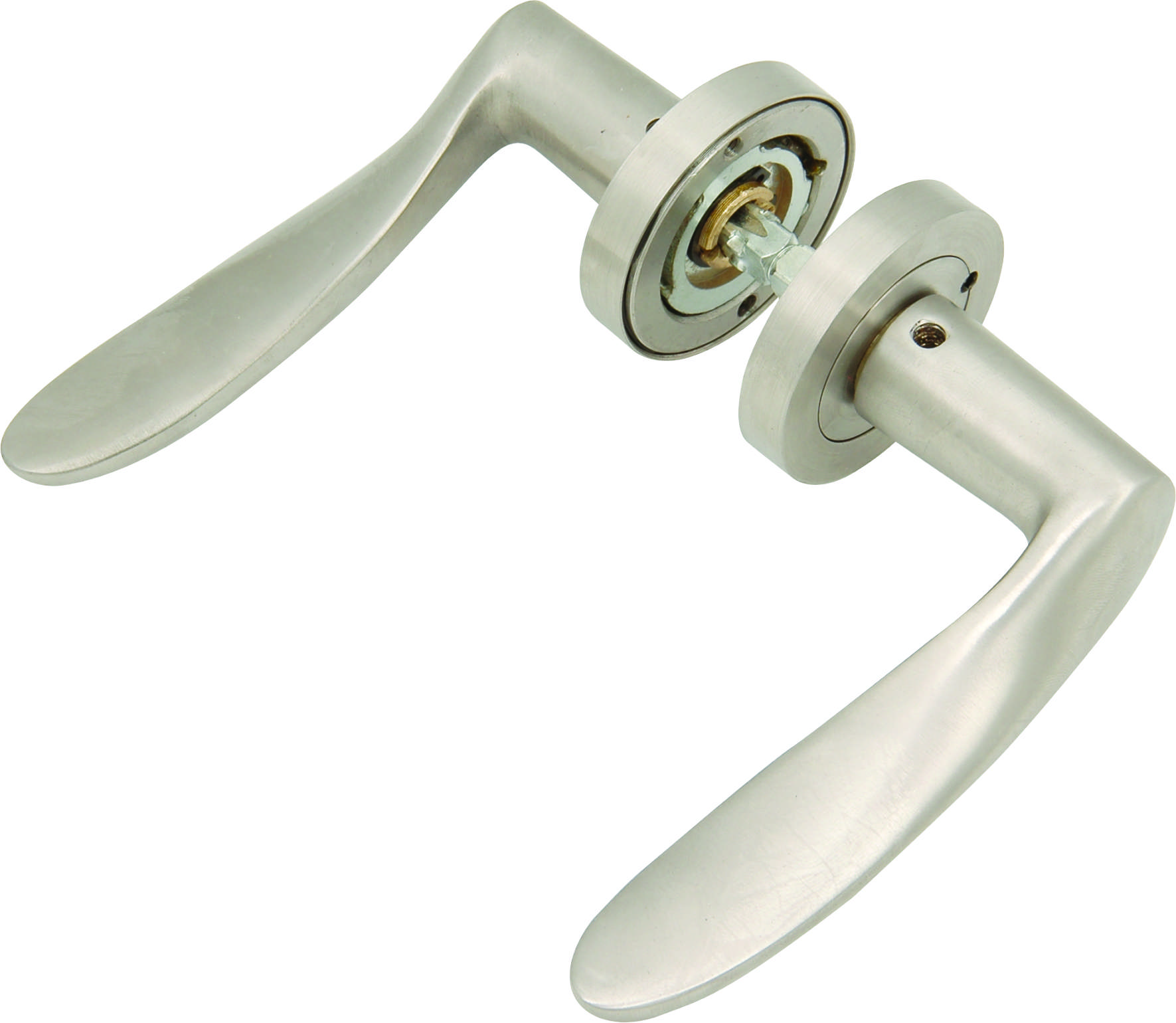
Visual shape must always be backed by substantial physical mass. A visually stunning design fails completely if it feels cheap upon touch. A solid brass lever handle provides necessary kinetic resistance. It delivers the premium "feel" explicitly expected in high-end builds. We gauge quality unconsciously through physical weight.
Manufacturers create solid components through advanced forging or casting. This intense process aligns the metallic grain structure tightly. It yields an incredibly strong, unified piece of hardware. Conversely, hollow tubes undergo simple extrusion and bending processes. They lack structural density fundamentally. They echo hollowly during operation. They destroy the luxury illusion instantly.
Solid construction fundamentally prevents the grip from bending over time. Hollow variants often dent heavily under routine commercial use. Impact from delivery carts or rough handling crushes thin metal effortlessly. Solid materials withstand severe daily abuse without structural deformation. They maintain their factory silhouette for decades.
You must acknowledge the higher upfront cost of solid materials. However, you should frame this against rapid degradation. Hollow alternatives incur frequent, expensive replacement costs. Maintenance teams waste hours swapping out bent, failing hardware. Solid items offer a vastly superior cost-to-lifespan ratio.
Ergonomic shapes distribute hand contact evenly across the entire surface. This broad distribution results in a highly uniform patina. Unlacquered finishes depend on this consistent interaction. Living surfaces age beautifully when users touch them consistently. The natural oils from human hands blend the finish naturally. It prevents splotchy, uneven oxidation spots from forming.
Conversely, sharp, linear grips concentrate friction on distinct edges. Users repeatedly rub the exact same narrow angles daily. This repetitive behavior leads to faster finish wear on specific corners. You will see bright brass shining through dark bronze edges rapidly. The contrast looks messy rather than intentionally aged.
Environmental factors also accelerate wear on prominent edges. Salt air, cleaning chemicals, and high humidity attack sharp corners first. A rounded, ergonomic shape deflects these environmental stressors better. The smooth surface allows cleaning agents to wipe off cleanly. Sharp crevices trap moisture and accelerate localized corrosion.
Some projects prioritize low-maintenance uniformity over a living finish. You must recognize when a living surface becomes a distinct liability. In these specific cases, it is much more pragmatic to specify a satin chrome door handle. Plated options or PVD-coated variations resist localized wear patterns easily. Complex grip shapes maintain their pristine appearance much longer under industrial coatings.
A deep ergonomic curve can dangerously reduce the clearance space. It minimizes the gap between the grip and the door face. You must carefully evaluate the required minimum clearance before ordering. ADA regulations typically demand at least 1.5 inches of clearance. Ignoring this exact metric guarantees scraped knuckles and deeply frustrated users.
Door backsets dictate where the handle sits horizontally. A narrow backset pushes the handle closer to the door frame. If you specify a deep, curving grip here, disaster strikes. Users will crush their hands between the lever and the door jamb. Narrow stile aluminum doors exacerbate this exact problem. Always coordinate the grip depth directly against the backset dimension.
Symmetrical straight levers are often conveniently non-handed. You can reverse them easily during on-site installation. Asymmetrical, heavily contoured grips require precise, advanced specification. You must explicitly order Left-Hand (LH) or Right-Hand (RH) configurations. This rigid requirement significantly increases ordering complexity. It also multiplies logistical risks if doors change swing directions late.
Heavy mass inherently requires heavy mechanical support. A substantial brass door lever handle requires robust internal cassette springs. Weak springs fail entirely to lift the heavy metal horizontally. This mechanical failure causes unsightly "lever sag" over time. The handle droops sadly toward the floor.
You need a clear, repeatable decision matrix. Hardware consultants rely on detailed door schedules. You should create one for your project early. Document every single opening meticulously. Note the fire rating, the security requirement, and the user profile. This schedule dictates exactly which grip shapes work where. Follow this logical progression to finalize your hardware selection confidently.
Order a single physical sample of your preferred grip shape. Test the tactile feel firsthand in the field. Verify the ergonomic clearance in the actual project environment. Mockups reveal hidden dimensional flaws incredibly quickly. They prevent costly ordering mistakes across the entire project.
The ideal grip shape represents a careful intersection of competing needs. You must merge architectural styling seamlessly with ergonomic reality. You must also satisfy strict compliance requirements simultaneously. Evaluating the physical mass proves equally critical to project success. Wear patterns matter just as much as the initial silhouette.
A: No. Straight, symmetrical grips are often reversible. You can install them on either side. However, ergonomically curved shapes are strictly handed. They fit only one direction. Always verify the specific product requirements before ordering.
A: ADA guidelines require handles that users can operate with one hand. They must not require tight grasping or twisting. Return-to-door shapes are highly recommended. These closed profiles effectively prevent clothing snags and ensure safe passage.
A: Yes. Grips featuring sharp angles concentrate friction. Users touch these edges repeatedly, polishing them much faster. Conversely, contoured handles distribute hand contact evenly. This wide distribution develops a beautifully uniform patina across the entire surface.