
Views: 0 Author: Site Editor Publish Time: 2026-07-23 Origin: Site


Poor drainage in commercial kitchens creates immediate operational hazards. Slow water clearance leads to severe sanitation risks, delayed dishwashing cycles, and health inspection failures. When a wash station backs up, the entire kitchen workflow stalls, forcing staff to manually manage wastewater instead of prepping food. You face a frequent mismatch between high-pressure water inflow from pre-rinse sprayers or commercial faucets and the outflow capacity of your drainage system. This outflow capacity is primarily dictated by pipe diameter and specific hardware restrictions at the basin level.
Understanding how outlet diameter affects flow rate is necessary for proper facility management. Fluid dynamics and specific hardware components dictate the actual clearance rate, regardless of what the blueprints suggest. This guide provides a technical evaluation of these factors. You will learn how to specify the correct drainage setup for high-volume environments, ensuring your wash stations operate efficiently, handle peak service hours, and remain compliant with local health codes.
Exponential Impact of Diameter: Based on fluid dynamics (Poiseuille’s Law), even a marginal increase in pipe diameter exponentially increases potential flow rate and reduces friction loss.
Effective vs. Nominal Diameter: Real-world flow rate is governed by the "effective" diameter, which is frequently reduced by hardware bottlenecks, grease accumulation, and solid waste.
Hardware as Flow Restrictors: Components like a sink drain strainer or a brass drain valve determine the actual clearance rate, regardless of the downstream pipe size.
Hydraulic Balancing in Multi-Compartment Sinks: Sinks with multiple compartments sharing a single drain line are highly susceptible to backflow and slow drainage if elevation drops and connection fittings are poorly designed.
Compliance Dictates Design: Flow rate optimization must operate within the strict boundaries of commercial plumbing codes, including mandatory air gaps, grease interceptor capacities, and specific floor slope requirements.
Flow rate in a pipe relies heavily on its internal radius. Poiseuille’s Law explains this mathematical relationship in fluid dynamics. The flow rate is proportional to the radius raised to the fourth power. This means a small increase in pipe size yields a massive increase in water volume clearance. A 2-inch pipe does not just carry twice the volume of a 1-inch pipe. It carries significantly more, assuming pressure and fluid viscosity remain constant. Upgrading the outlet diameter fundamentally changes the physical capacity of your wash station.
When designing a commercial wash area, engineers use these principles to calculate maximum discharge rates. If a pre-rinse station outputs five gallons per minute, the drain must exceed that capacity to prevent standing water. Relying on undersized pipes forces the system to operate at maximum capacity constantly, leaving no room for error when debris enters the line. By applying the principles of Poiseuille’s Law, installers can select pipe diameters that provide a safety margin for high-volume dumping.
Smaller pipe diameters force water to travel at a higher velocity to clear the same volume. High fluid velocity exponentially increases friction against the interior pipe walls. This friction loss acts as a brake on the water. It reduces the overall mass flow rate. When friction loss exceeds the gravitational pull of the water, you get standing water in the basin. Managing friction by selecting an appropriate diameter is essential for rapid drainage.
Pipe material also plays a role in friction loss. Cast iron pipes have a rougher internal surface compared to PVC or ABS, creating more drag on the wastewater. Over time, as pipes age and corrode or scale builds up, the friction coefficient increases. A pipe that drained perfectly on day one may become sluggish years later simply due to increased surface friction. Sizing up the diameter during initial installation helps offset this inevitable degradation.
The total run length of the drain line compounds the effects of a narrow diameter. A long, narrow pipe changes the gravitational operating point of the entire plumbing system. This severely restricts the cumulative gallons per minute capacity. Water loses energy as it travels. If the pipe is too restrictive over a long distance, the initial flow velocity at the sink basin drops dramatically. Short, properly sized runs are always preferable in commercial setups.
To minimize the impact of long pipe runs, installers follow specific routing strategies:
Locate floor sinks directly beneath or immediately adjacent to the wash station to keep indirect waste lines under 24 inches.
Use 45-degree fittings instead of 90-degree hard angles to maintain fluid momentum through changes in direction.
Increase the pipe diameter by one full size if the horizontal run exceeds 10 feet before tying into the main branch.
Ensure the venting system is tied in as close to the trap weir as code allows to prevent vacuum formation in long runs.
Commercial sinks rely entirely on gravity to clear water. The hydrostatic head, which is the depth of the water in the sink, provides the initial push. The pipe diameter determines how much of that push translates into actual flow. These two factors are the sole drivers of initial flow velocity. You cannot force water down a gravity-fed drain faster than the diameter and hydrostatic pressure allow. Designing around these physical limits prevents chronic backups.
When a 14-inch deep pot sink is full, the water at the bottom is under significant pressure. When the valve opens, the initial surge is powerful. As the water level drops, the hydrostatic head decreases, and the flow rate slows down. If the drain diameter is too small, the initial surge creates a bottleneck at the valve, causing turbulence and slowing the entire draining process. A properly sized drain allows the initial surge to clear instantly, maintaining a steady vortex until the basin is empty.
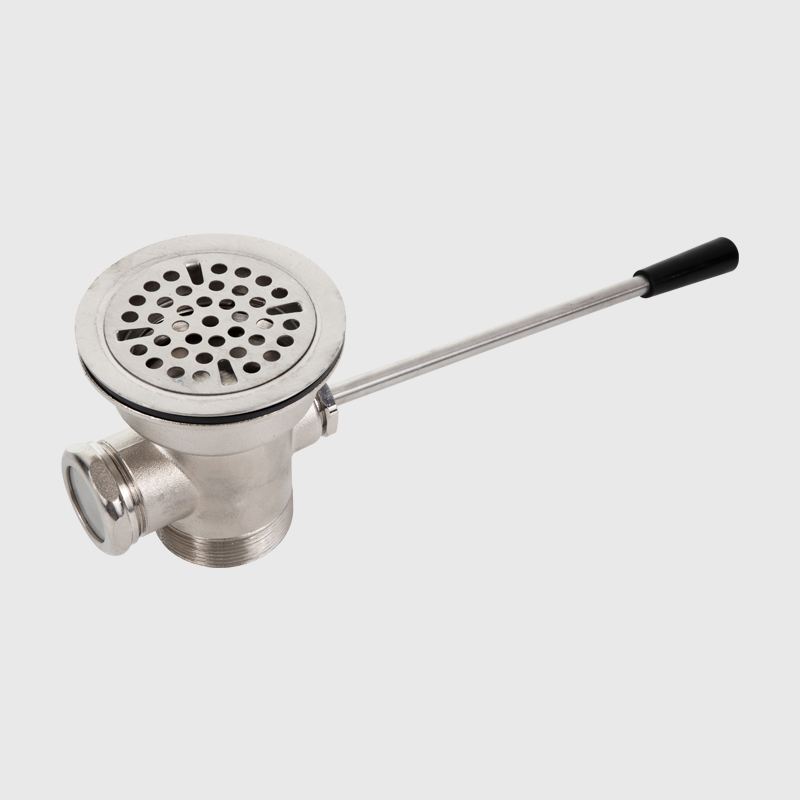
Commercial wash stations utilize standard outlet sizes. Common configurations include 1.5-inch, 2-inch, and 3-inch outlets. The success criteria for sizing depend on the number of compartments and the total volume of the wash station. A single handwash sink functions perfectly with a 1.5-inch drain because the water volume is low and mostly free of solids. A massive three-compartment pot-washing station requires at least a 2-inch or 3-inch outlet to handle rapid dumps of soiled water.
Choosing the wrong standard size leads to immediate operational failures. Installing a 1.5-inch drain on a food prep sink means the basin will fill up faster than it can drain when washing large batches of vegetables. Plumbers must evaluate the peak usage scenario for each specific fixture. The nominal size chosen during the rough-in phase dictates the maximum possible performance of that station for the life of the building.
Nominal diameter is the measurement printed on the pipe. Effective diameter is the actual open space available for water to flow. Fats, Oils, and Grease (FOG) buildup artificially reduces the internal diameter of the pipe over time. A 2-inch pipe coated in thick grease operates like a 1-inch pipe. However, pipes that are too large create a different problem. They lack self-scouring velocity. Slow-moving water in an oversized pipe leaves solid debris behind. This debris accumulates and causes future clogs. You must balance capacity with self-scouring requirements.
Maintaining the effective diameter requires a strict maintenance schedule. Kitchen staff cannot treat the drain like a trash can. Even with proper sizing, neglect will shrink the effective diameter to zero. Regular inspections and cleaning are mandatory to keep the plumbing operating at its nominal capacity.
Impact of FOG Buildup on Effective Pipe Diameter | |||
Nominal Pipe Size | FOG Buildup Thickness | Effective Diameter | Estimated Flow Reduction |
|---|---|---|---|
2.0 inches | 0.0 inches (Clean) | 2.0 inches | 0% |
2.0 inches | 0.25 inches | 1.5 inches | ~40% |
2.0 inches | 0.5 inches | 1.0 inch | ~75% |
3.0 inches | 0.5 inches | 2.0 inches | ~55% |
Multi-compartment sinks often share a common waste line. This creates a common failure point. Two or three outlets merging at near-equal heights cause hydraulic collisions. Identical elevation levels and poorly chosen T-connections force water to fight for space. Drainage from one compartment frequently backs up into the adjacent compartment. This reduces the effective drainage velocity across the entire unit. Using proper sanitary wyes and ensuring adequate downward slope mitigates this dilemma.
When piping a three-compartment sink, the continuous waste assembly must be designed to direct flow smoothly. Using standard tees causes the water dropping from the center compartment to splash back up into the left and right compartments. Installers must use directional fittings that sweep the water toward the final trap. Additionally, increasing the size of the common tubular waste line from 1.5 inches to 2 inches before it hits the P-trap provides the necessary volume to handle two compartments draining simultaneously.
The open surface area of a sink drain strainer directly impacts the initial flow rate. The strainer is the first physical barrier water encounters. You face a constant trade-off. Fine strainers prevent clogs by catching small debris, but they severely restrict flow. Coarse strainers maintain high flow rates but increase the risk of downstream blockages. Selecting a strainer with a high total open area relative to the pipe diameter helps maintain clearance speed while protecting the plumbing.
A standard basket strainer might have an open area that is only 50% of the actual pipe diameter. This means a 2-inch drain is immediately choked down to the equivalent of a 1-inch pipe right at the basin. High-flow commercial strainers use slotted designs or larger, strategically placed holes to increase the open area to 70% or 80%. When specifying hardware, always calculate the total open area of the strainer basket to ensure it does not become the primary bottleneck in your drainage system.
Rotary and lever waste valves are standard in three-compartment sinks. The internal bore size of these valves is critical. A heavy-duty brass drain valve provides necessary durability and heat resistance for commercial dishwater. However, it must match the outlet diameter exactly. If the valve's internal bore is smaller than the pipe, it creates turbulence and restricts flow at the connection point. Full-port valves maintain the full diameter of the pipe. Standard-port alternatives choke flow rates and cause the basin to drain sluggishly.
When a dishwasher dumps a 20-gallon sink full of greasy, 140-degree water, the valve takes the brunt of the thermal shock and physical force. Cheap plastic valves warp over time, causing the internal gate to stick or fail to open fully. This partially closed gate acts as a permanent flow restrictor. Brass construction ensures the valve body remains dimensionally stable, allowing the gate to open completely and provide an unobstructed path for the wastewater to exit the basin.
Health codes require an air gap between the fixture’s water supply and the flood level rim. This prevents contaminated water from siphoning back into the clean water supply. Many commercial sinks utilize indirect drainage. They drain into a floor sink with an air gap rather than connecting directly to the sewer line. This indirect setup affects the overall system flow rate calculation. The floor sink must be able to accept the maximum discharge rate of the wash station without overflowing.
If a three-compartment sink with 2-inch drains dumps into a floor sink that only has a 2-inch outlet and a shallow dome strainer, the floor sink will flood the kitchen. The receiving floor sink must have a larger capacity than the discharging fixture. Typically, a high-volume wash station requires a floor sink with a 3-inch or 4-inch outlet to safely catch and route the indirect waste without splashing or backing up onto the tile floor.
Commercial plumbing inspectors evaluate wash stations rigorously. They test the maximum hot and cold water inflow rate against the clearance rate of the kitchen sink drain. The goal is to ensure zero overflow potential. If you turn all faucets on full blast, the basin should not fill up and spill over the flood rim. Properly sizing the outlet diameter and hardware is the only way to pass this critical inspection phase.
Inspectors will also check the drainage time of a fully loaded sink. They will fill the compartments to the flood rim and open the valves simultaneously. The system must clear the water within a specific timeframe dictated by local code, usually a few minutes. If the water drains too slowly, the inspector will fail the plumbing rough-in, forcing the contractor to tear out the wall and upsize the waste lines before the restaurant can open.
The plumbing code mandates specific floor slopes leading to floor drains. A standard requirement is a 1/4 inch drop per foot of run. This ensures gravity keeps the water moving. The downstream grease trap or interceptor acts as a flow-restricting barrier. Its sizing must match the outlet flow rate. If the interceptor is too small, it will choke the entire line, causing backups in the kitchen regardless of how large the initial sink outlet is.
Grease interceptors are rated by gallons per minute (GPM). If your sink setup discharges at 50 GPM, but your interceptor is only rated for 20 GPM, the internal baffles of the interceptor will restrict the flow, causing water to back up into the floor sinks. You must calculate the total potential discharge of all fixtures tied into the grease line and size the interceptor accordingly. An undersized interceptor not only causes slow drainage but also fails to separate grease effectively, leading to city fines.
When a sink runs slowly despite clear pipes, you must diagnose systemic issues. Often, the problem is not a solid clog but a restriction in airflow or a downstream bottleneck that reduces the effective flow rate. Follow a systematic approach to identify the root cause.
Check the roof vent or air admittance valve to ensure the line is breathing properly; a blocked vent creates a vacuum that stops flow.
Inspect the continuous waste assembly under the sink for improper fittings, such as sanitary tees installed on their side.
Verify that the lever waste valve is opening completely; a bent linkage can leave the gate partially closed.
Examine the floor sink dome strainer for debris that might be restricting the indirect waste discharge.
Measure the grease level in the downstream interceptor; a full trap severely restricts the outgoing flow rate.
Retrofitting larger sink outlets to existing, undersized wall plumbing creates severe bottlenecks behind the wall. You cannot push a 2-inch volume of water into a 1.5-inch wall pipe without causing a backup. Mitigate these risks by matching valve bore sizes to the existing infrastructure. Implement routine line jetting to maintain the effective diameter by removing FOG buildup. Ensure proper venting is in place to prevent vapor lock during high-volume discharges.
If you must upgrade a sink but cannot change the wall plumbing, you must manage the discharge rate. You can install flow restrictors on the faucets to limit the inflow, ensuring it never exceeds the outflow capacity of the old pipes. Alternatively, you can train staff to drain only one compartment at a time. However, these are operational band-aids. The only permanent solution is to break the wall and upgrade the branch line to match the new fixture's requirements.
Facility managers must weigh upfront hardware costs against long-term operational efficiency. Commercial-grade, large-diameter brass fittings require a higher initial investment. Undersized or cheap plastic components lead to frequent plumbing emergencies. The cost of emergency rooter services and kitchen downtime quickly exceeds the price of installing full-port valves and appropriately sized piping from day one.
When a kitchen shuts down on a Friday night because the pot sink won't drain, the lost revenue is staggering. Investing in 2-inch continuous waste tubulars, heavy-duty brass valves, and high-flow strainers is an insurance policy against catastrophic failure. Building the system right the first time guarantees that the dish pit can keep up with the dining room, maintaining the flow of clean plates and keeping the operation profitable.
Audit your current wash station configurations to identify immediate hardware bottlenecks like restrictive strainers or standard-port valves.
Verify that your downstream pipe capacities and grease interceptors can handle the maximum discharge volume of your fixtures.
Consult local health and plumbing codes before purchasing or installing retrofit hardware to ensure full compliance.
Schedule routine hydro-jetting to maintain the effective diameter of your drain lines and prevent FOG accumulation.
Replace any undersized lever waste valves with full-port brass alternatives to maximize initial flow velocity.
A: Larger pipe diameters reduce friction loss against the pipe walls. Based on fluid dynamics, increasing the radius exponentially increases the volume capacity. This allows water to clear much faster under gravity, preventing standing water during high-volume dishwashing cycles.
A: Slow drainage without a hard clog usually indicates a systemic restriction. This can be caused by poor venting creating a vapor lock, restrictive hardware like a narrow valve, a downstream grease trap bottleneck, or a lack of adequate hydrostatic head in the basin.
A: Yes. The total open area of the strainer holes compared to the pipe's cross-sectional area determines the level of restriction. Fine strainers choke the flow rate significantly, while coarse strainers allow faster drainage but let larger debris pass through.
A: Brass valves offer superior durability and resistance to the high-temperature water and harsh chemicals used in commercial dishwashing. Full-port brass designs provide reliable sealing without restricting the internal diameter, ensuring maximum flow rates.
A: This occurs due to height level imbalances or improper fittings in shared waste lines. Using sanitary tees instead of sanitary wyes causes water to push across into the adjacent drain rather than directing the flow smoothly downward.
A: Yes. Oversized pipes lack self-scouring velocity. The water spreads too thin across the bottom of the large pipe, failing to carry solid waste and grease away. This leads to heavy buildup and eventual clogs.
A: Industry standards typically require 1.5-inch to 2-inch outlets per compartment. These individual drains usually merge into a larger common drain line, often 2 to 3 inches in diameter, to handle the combined volume efficiently.