
Views: 0 Author: Site Editor Publish Time: 2026-10-28 Origin: Site


Selecting the perfect finish for Brass Door Handles often feels like a purely aesthetic choice. You browse different styles, comparing satin finishes against polished antique brass. However, sizing the backplate correctly remains a strict technical requirement. We frequently see buyers focus exclusively on design while ignoring critical dimensions. Choosing the wrong backplate size creates immediate, visible problems. It results in exposed bore holes and misaligned locking mechanisms. You might also uncover visible "ghost lines" from previous hardware installations. These simple errors lead to costly door repairs, wood filler applications, or frustrating product returns. We created this guide to solve these exact issues. We provide a concrete, measurement-first framework for your next project. It helps you evaluate and select the correct backplate size for any brass handle with backplate. By prioritizing accurate measurements, you ensure a flawless, professional installation. Read on to discover the exact formulas and fitment checks you need before completing your purchase.
Measurement Dictates Choice: The center-to-center distance (PZ measurement) between the spindle and keyhole is the primary constraint when choosing backplate size.
Retrofit Realities: For existing doors, the new backplate must be at least 2mm to 5mm wider and taller than the old hardware to cover faded paint or indentation marks.
Mechanism Matching: Backplate lengths vary fundamentally based on function (latch only, key lock, euro cylinder, or bathroom thumbturn).
Visual Scaling: Beyond mechanics, the backplate must remain proportionate to the door's stile (the vertical framing), ensuring the door hardware does not crowd the edge.
You must define your starting point before purchasing a brass door handle. Every project falls into one of two distinct categories. You are either working with brand new doors or retrofitting existing ones. These two paths dictate completely different selection criteria.
New doors offer ultimate freedom. Your focus shifts away from hiding old mistakes. Instead, you prioritize stylistic proportion. You can standardize bore hole sizes across the entire property. This consistency speeds up installation immensely. Builders and installers love working with virgin timber. You enjoy greater flexibility when selecting your plates. You can easily choose smaller, minimalist backplates. You do not have to worry about covering ugly cross-bores. The only constraint is ensuring the internal latch mechanism fits the newly drilled holes.
Updating old hardware introduces strict limitations. This route requires careful planning and measurement. Removing an old handle often reveals unpleasant surprises. You will likely find unpainted wood or faded stain lines. Deep indentations from tightly screwed plates are very common. Sometimes, you uncover oversized, jagged cross-bore holes.
The primary function of your new backplate becomes concealment. Design takes a backseat to coverage. You must measure the exact footprint of the old plate. Record both the maximum height and maximum width. We recommend adding a 5% margin to these dimensions. This buffer guarantees complete coverage. It prevents you from spending hours sanding and repainting the door surface.
Best Practice: Always remove one complete handle set before ordering replacements. Do not guess the hidden dimensions. Measure the bare door surface directly.
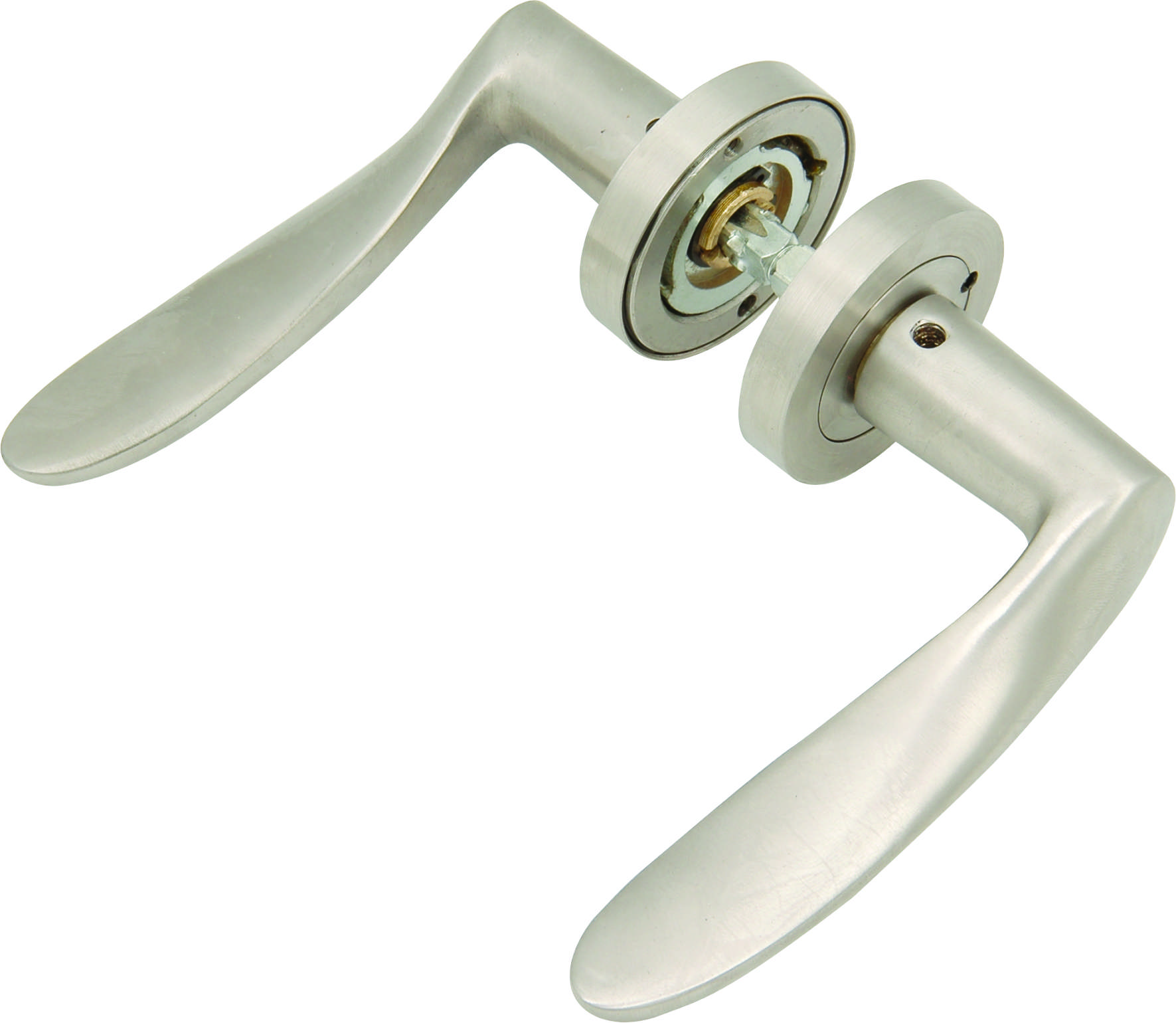
You must evaluate three critical dimensions before shortlisting any door hardware. Skipping these checks usually results in incompatible parts. The industry relies on standardized measurements to ensure interchangeable components. Let us break down exactly what you need to record.
The PZ measurement dictates your fundamental mechanical fit. It defines the exact distance from the center of the spindle hole to the center of the keyhole. The spindle hole is where your door lever handle sits. You cannot force a fit if this number is wrong.
Standard sizes vary by region and lock type. For example, standard UK sashlocks usually require a 57mm PZ. Standard bathroom locks often sit at 57mm as well. Euro profile cylinders typically demand a 72mm or 92mm center. A simple millimeter mismatch here makes installation impossible. The key will rub against the brass, or the spindle will not turn.
The backset measures the distance from the edge of the door to the center of the spindle. It determines how deep the latch sits inside the wood. Why does this matter for your backplate? It controls your horizontal clearance.
If you choose a very wide backplate for a short backset, problems occur. The handle edge will sit dangerously close to the door frame. When you close the door, your knuckles might scrape the jamb. The brass plate itself might even hit the doorstop. Always ensure your chosen plate width leaves adequate clearance.
Your new plate must securely cover the cross-bore hole. Modern doors frequently feature a standard 54mm (2 1/8") diameter bore hole. UK and EU doors sometimes feature varied sizes. You must calculate the minimum width required for stability.
Measure the maximum diameter of the existing hole.
Add at least 3mm to 5mm to all sides.
Ensure the new plate width exceeds this total number.
If your backplate barely overlaps the hole, the screws will lack bite. They will angle into empty space. This causes the handle to pull away from the door over time.
Standard Measurement Reference Chart
Measurement Component | Definition | Why It Matters |
|---|---|---|
PZ (Lock Center) | Center of spindle to center of keyhole | Ensures lever and key mechanism align perfectly. |
Backset | Door edge to spindle center | Prevents knuckle scraping and frame collisions. |
Footprint Overlap | Plate width vs. bore hole diameter | Provides structural stability for mounting screws. |
The specific function of your door directly dictates the minimum size of the backplate. Different locking mechanisms require vastly different vertical clearances inside the brass casting.
Passage doors require no locking function. They connect hallways to living rooms or dining spaces. These doors only need a simple tubular latch. Because they lack a keyhole, they utilize shorter backplates. These plates typically range around 110mm to 150mm in length. They only need enough structural space to house the top spindle hole and two mounting screws.
Doors requiring traditional keys use a sashlock system. This mechanism combines a latch and a deadbolt into one unit. The backplate needs enough vertical space below the handle to accommodate the standard key profile. This requirement usually dictates a minimum backplate length of 150mm or more. Anything shorter pushes the keyhole too close to the bottom mounting screw.
Privacy doors must house a thumbturn and an emergency release mechanism. Standard bathroom locks utilize a 57mm center distance. This distance dictates a specific backplate length. If the plate is too short, the thumbturn sits too close to the edge. This placement causes structural weakness in the brass casting. It also ruins the visual balance of the hardware.
High-security exterior doors usually feature Euro cylinder locks. These locks have an elongated, bulky profile. They require the largest backplates available on the market. The brass plate must securely house the entire cylinder shape without exposing the internal door cavity. These heavy-duty plates often exceed 200mm in length.
Technical fit is only half the battle. You must balance strict mechanical requirements with intelligent design logic. A poorly scaled backplate ruins the aesthetic appeal of a room.
The stile is the vertical framing section on the edge of a paneled door. Interior designers follow a strict scaling rule. The backplate width should ideally not exceed 50% to 60% of the door stile's width. For example, if your stile measures 100mm wide, keep your backplate under 60mm. Overcrowding the stile looks visually heavy. It makes the door look cramped and poorly planned. It also risks structural splintering during installation, as screws hit the outer edge of the timber frame.
You must match the visual weight of the hardware to the door itself.
Heavy Timber Doors: Solid oak or mahogany doors require thicker, longer backplates. Plates measuring 200mm or more look proportionate here. Large backplates also provide deeper cavities to support heavier, heavy-duty lever springs.
Modern Hollow-Core Doors: Lightweight interior doors pair better with slimmer, lighter backplates. Heavy brass plates overpower thin doors. They also stress the internal honeycomb structure of hollow panels.
Common Mistake: Installing a massive, ornate 250mm plate on a modern flush door. The clash in proportions highlights the lack of architectural planning.
Buying hardware online requires vigilance. You must check several hidden compatibility factors before placing your order. Ignoring these risks leads to failed installations.
You must ensure your chosen backplate houses the correct spring cassette. Many heavy brass handles contain internal springs to push the lever back to horizontal. Some handles rely entirely on the internal door latch spring. If your internal door latch is un-sprung, buying an un-sprung backplate results in a drooping handle. Always match a sprung handle to an un-sprung latch, or vice versa. Double-check the product specifications for "spring cassette included."
Check where the screw holes are located on the new backplate. Compare this to your existing door. If the new holes align exactly with the stripped-out screw holes of the old handle, you face a problem. The new screws will not grip the wood. Installation will require filling the old holes with wooden dowels and re-drilling the door. Opting for a slightly taller backplate often moves the fixing centers to fresh, solid wood.
Ensure the spindle length provided with the chosen backplate size can accommodate your specific door thickness. Standard interior doors usually measure between 35mm and 44mm thick. Most supplied spindles fit this range perfectly. However, fire doors measure 54mm thick or more. They require significantly longer spindles and longer connecting bolts. Confirm the maximum door thickness rating before finalizing your purchase.
Selecting the right backplate size blends strict mechanics with thoughtful aesthetics. Successful selection requires you to measure the PZ center accurately. You must map the exact footprint of your old hardware. You also need to check the width of your door stile to maintain proper visual proportions.
When shortlisting products, always prioritize mechanical fit and complete coverage first. Once you secure those dimensions, you can filter your choices by beautiful brass finishes and architectural styles. Form must follow function.
Your next step is simple and actionable. Grab a screwdriver and remove one existing door handle today. Measure the exposed bore hole. Note the diameter of the faded paint line. Use those exact dimensions as your minimum baseline before browsing supplier catalogs.
A: Yes. If the backplate width exceeds the backset measurement minus the required door frame overlap, problems occur. The handle or the plate itself will hit the doorstop or the frame when closing. This prevents the door from latching and causes permanent damage to the brass finish.
A: There is no single universal standard. Sizes vary entirely by function. However, typical latch-only backplates sit around 110mm x 40mm. Standard sashlock backplates require more vertical space, averaging about 150mm x 40mm.
A: First, measure the full diameter of the old round rosette. This is typically between 50mm and 65mm. Ensure your new rectangular or arched backplate is at least 5mm wider than that specific diameter. This guarantees you completely cover the old circular indentation.
A: Yes. Fire doors legally require specific hardware. The backplate, internal spindle, and fixings must be explicitly fire-rated. Look for CE marked or UL listed components. These are rigorously tested to maintain the door's fire integrity for 30 or 60 minutes during an emergency.