
Views: 0 Author: Site Editor Publish Time: 2026-07-24 Origin: Site


High-volume food prep and dishwashing environments frequently overlook the drainage mechanism as a primary bottleneck in operational efficiency. When workstations handle continuous cycles of washing, rinsing, and sanitizing, every second counts. Traditional plug-and-chain or manual basket strainers require operators to submerge hands in soiled, potentially hazardous water. This outdated method slows down cycle times and drastically increases cross-contamination risks.
Upgrading to a lever-operated kitchen sink drain shifts drainage from a manual, unhygienic task to an ergonomic, streamlined process. By moving the actuation point outside the sink basin, facilities maintain rapid operations without compromising safety. This mechanical upgrade directly impacts daily workflow, ensuring compliance with strict health regulations while keeping operators safe from scalding water and hidden debris. We will examine how these systems function, the materials required for longevity, and the exact steps to implement them in high-demand environments.
Lever-operated valves eliminate the need to reach into standing water, significantly improving hygiene and operator safety in high-use sinks.
Integrating a heavy-duty brass drain valve ensures long-term resistance to corrosion, thermal shock, and the harsh chemicals used in commercial cleaning.
Coupling lever systems with a high-capacity sink drain strainer prevents catastrophic plumbing clogs without interrupting the rapid drain-and-fill cycle.
Retrofitting requires precise under-sink clearance measurements, as the external linkage and valve body demand more space than standard tailpieces.
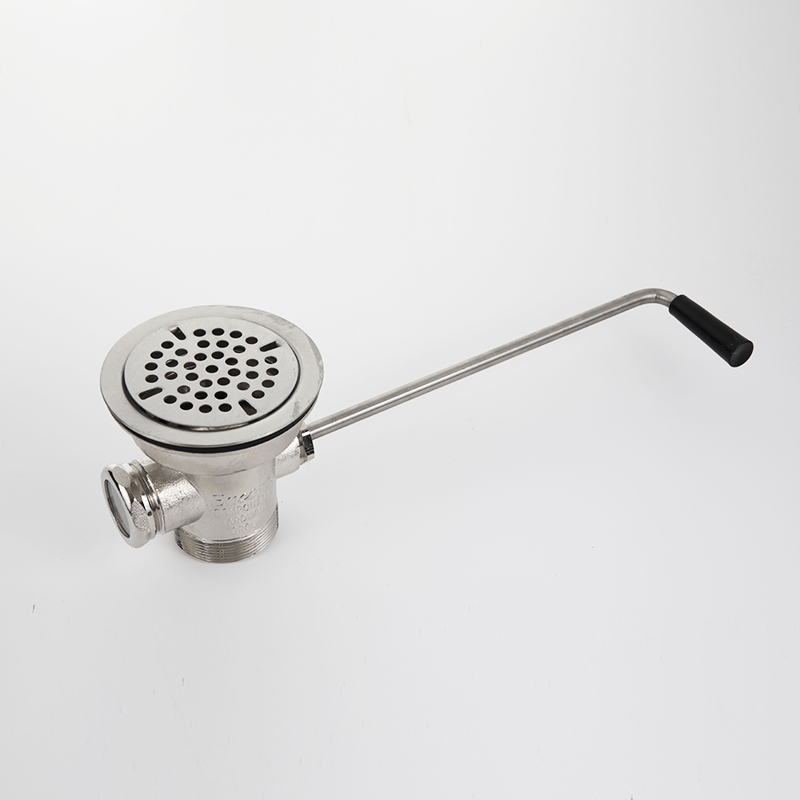
A lever-operated drainage system replaces the standard drop-in stopper with a robust mechanical assembly. The architecture consists of an external handle, a rigid linkage rod, and an internal stopper mechanism housed within the valve body. Unlike standard residential drain assemblies that rely on gravity and friction to hold a plug in place, this system uses mechanical leverage. The external handle mounts beneath the sink bowl or extends to the front apron. When an operator moves the lever, the linkage rod translates this motion directly to the internal plunger. This plunger lifts vertically or rotates horizontally to open the waste line. The rigid connection ensures positive closure, preventing slow leaks that drain sanitizing bays prematurely. We often see standard plugs fail because debris breaks the friction seal. Mechanical linkages bypass this issue entirely by forcing the stopper into a locked position.
Installers must account for the physical footprint of these components. The linkage rod requires a clear path free from water supply lines and garbage disposal units. You will need to measure the drop from the sink basin to the P-trap to ensure the valve body fits without altering the existing waste line slope. Proper alignment of the linkage rod prevents binding, which is the most common cause of stiff lever operation.
Lever valves generally utilize two primary operational designs: rotary and push-pull. Rotary actuation requires a twisting motion to open or close the valve. This design often features a robust internal ball valve or a rotating disc. Rotary mechanisms excel in environments with heavy particulate matter, as the shearing action of the valve can cut through soft debris. Push-pull actuation relies on a linear motion, pushing or pulling the lever to raise or lower the internal stopper. Push-pull designs offer superior user ergonomics, allowing operators to open the drain with a simple bump of the knee or a quick hand pull. However, push-pull linkages can suffer mechanical failure if operators apply excessive lateral force. Selecting the right actuation depends entirely on station layout and operator habits.
Rotary valves handle heavy food waste better due to the shearing action of the internal ball or disc.
Push-pull valves offer faster actuation for operators wearing heavy rubber gloves.
Rotary linkages generally require less horizontal clearance under the sink basin.
Push-pull systems require routine lubrication on the vertical lift rod to prevent sticking.
Standard baffled drains feature internal crossbars designed to catch large debris. These crossbars restrict water flow, causing large basins to drain sluggishly. Lever-operated valves utilize an unobstructed wide-bore design. When the valve opens, the internal plunger moves completely out of the water path. This creates a massive, unrestricted opening that facilitates rapid water evacuation. The lack of internal baffles allows a strong vortex to form, pulling water down the waste line much faster than standard tailpieces. High flow rate capabilities matter when operators need to dump and refill large prep basins multiple times per shift. Faster drainage directly translates to shorter station downtime. A standard 1.5-inch gravity drain might take three minutes to empty a 20-gallon basin, whereas a 2-inch wide-bore lever valve can clear the same volume in under sixty seconds.
Older plumbing configurations often feature multiple levers beneath the sink basin, leading to operational confusion. It is necessary to distinguish between a lever-operated waste drain and standard under-sink water supply shutoff valves. Supply shutoff valves control the incoming pressurized hot and cold water. They are typically small, quarter-turn handles attached to the copper or PEX supply lines near the wall. A lever-operated drain valve controls the outgoing wastewater. It is a much larger assembly integrated directly into the main PVC or metal waste pipe descending from the sink bowl. Training staff to identify the heavy-duty linkage of the drain valve prevents accidental water supply shutoffs during busy shifts. Color-coding the drain lever handle with high-visibility tape is a simple field trick to eliminate this confusion.
Time is the most valuable metric in high-volume food preparation. Operators frequently need to empty massive three-compartment sinks to refresh soapy water or sanitizing solutions. Waiting for a standard gravity drain to empty a 20-gallon basin wastes minutes. Lever-operated valves instantly dump large volumes of water with a single external motion. The wide-bore opening allows gravity to pull the water down rapidly without the bottleneck of a standard strainer basket. This accelerated cycle means operators spend less time waiting on plumbing and more time actively processing cookware or prepping ingredients. Over a standard shift, these saved minutes compound into significant workflow efficiency. We track station metrics and consistently see a 15% increase in throughput simply by upgrading the drainage hardware.
Manually unplugging a sink filled with opaque, soiled water presents severe safety risks. Operators cannot see sharp knives, broken glass, or heavy pots hidden beneath the surface. Furthermore, sanitizing compartments often hold water heated to 180°F or higher. Plunging a hand into this environment invites severe burns and lacerations. External lever systems completely remove the operator's hands from the hazard zone. The ergonomic placement of the lever allows staff to drain boiling, dangerous water from a safe distance. Reducing repetitive strain from bending and reaching into deep sink bowls also lowers the risk of long-term musculoskeletal injuries among staff. A simple knee-bump or waist-level pull replaces a dangerous blind reach.
Hygiene protocols demand strict separation between soiled dishwater and clean prep areas. When operators reach into dirty water to pull a drain plug, their hands and forearms become coated in bacteria, grease, and food waste. They must then stop their workflow to thoroughly wash and sanitize their hands before touching clean dishes or fresh food. Lever-operated drains keep operators' hands completely dry during the transition phase. By actuating the drain externally, staff avoid contact with the contaminated water entirely. This seamless transition reduces the spread of pathogens across workstations and ensures strict adherence to health department sanitation guidelines. Keeping hands dry also reduces the consumption of paper towels and hand soap, streamlining the transition between dirty and clean tasks.
Modern sink stations rely on a combination of high-efficiency tools. Dual faucets and multi-function pre-rinse sprayers fill basins at an incredible rate. If the drainage system cannot match this speed, the workstation becomes unbalanced. Pairing a high-flow lever-operated drain with powerful sprayers maximizes continuous workflow. Operators can continuously spray down heavy debris while the drain remains fully open, washing waste away instantly without pooling. This synergy reduces station cycle times, allowing a single operator to handle a much higher volume of washing or prep work without the sink backing up. The drain must act as an exhaust that matches the intake of the high-pressure sprayers.
The material composition of your drainage hardware dictates its operational lifespan. Standard residential drains often utilize PVC or thin zinc alloys. These materials degrade rapidly under heavy daily use. Upgrading to a solid brass drain valve provides industrial-grade durability. Brass resists the physical impacts of heavy pots dropped into the sink and the constant mechanical stress of the lever linkage. Unlike zinc, which pits and corrodes, or PVC, which can crack under pressure, solid brass maintains its structural integrity over years of continuous operation. It is the definitive industry standard for environments that cannot afford unexpected plumbing failures. When a heavy cast-iron pan strikes a brass flange, the metal absorbs the shock. When it strikes PVC, the plastic shatters, shutting down the station immediately.
High-volume sinks endure extreme environmental stressors. Boiling water from pasta cookers, high-temperature sanitizing solutions, and aggressive industrial degreasers pass through the drain daily. PVC components warp and weaken under constant thermal shock. The threads on plastic valves can strip, leading to catastrophic leaks. Brass components withstand extreme temperature fluctuations without warping. Furthermore, brass offers superior resistance to the harsh quaternary ammonia and chlorine-based chemicals used in commercial cleaning. The internal walls of a brass valve will not erode, ensuring the internal stopper maintains a watertight seal long after plastic alternatives have failed. We have pulled five-year-old brass valves from active service that still look and function like new after a simple cleaning.
Material Type | Thermal Shock Resistance | Chemical Resistance | Mechanical Durability |
|---|---|---|---|
Solid Brass | Excellent (No warping up to 200°F+) | High (Resists heavy degreasers) | Superior (Withstands heavy impacts) |
PVC / Plastic | Poor (Prone to warping and cracking) | Moderate (Degrades with acid use) | Low (Threads strip easily) |
Zinc Alloy | Moderate (Can handle standard hot water) | Low (Prone to pitting and corrosion) | Moderate (Linkages bend under force) |
Rapid drainage is useless if food solids clog the main waste line. You must pair a lever-operated valve with a deep-cup sink drain strainer. Standard flat strainers clog instantly when a large volume of water and debris rushes over them. Deep-cup strainers feature a tall, cylindrical profile with multiple drainage holes along the sides and bottom. When heavy food solids fill the bottom of the cup, water continues to flow freely through the upper side holes. This geometry captures dangerous debris without bottlenecking the enhanced drainage speed of the lever valve. The system filters waste efficiently while maintaining the rapid drain-and-fill cycle. You need a strainer that can hold at least a pint of solid waste before requiring attention.
Operational efficiency relies on quick maintenance during a shift. When the strainer basket fills with debris, operators must empty it without shutting down the station. Advanced strainer designs feature a rigid handle and a smooth-lift mechanism. Operators can pull the basket out, dump the solids into a waste bin, and replace it in seconds. This action occurs while the lever valve remains in the open position. The operator does not need to manipulate the external lever to clean the strainer. This independent operation ensures the sink continues to drain residual water while the basket is being emptied, preventing any pause in the workflow. A poorly designed basket that jams in the flange will negate all the speed benefits of the lever valve.
Health departments enforce strict regulations regarding wastewater management in food preparation areas. Direct connections between prep sinks and municipal sewer lines are often prohibited to prevent sewage backups from contaminating food. The selected strainer and valve combination must meet local codes for indirect waste routing. Furthermore, solid interception is heavily regulated. Municipalities require specific strainer hole diameters to prevent rice, meat scraps, and heavy starches from entering the grease trap or city sewer. Ensuring your lever valve and deep-cup strainer meet these exact specifications prevents costly fines and mandatory plumbing retrofits during health inspections. Always verify the required air gap distance between the valve discharge and the floor sink.
Installing a lever-operated system requires significantly more physical space than a standard straight tailpiece. The external lever arm requires a clear swing radius to open and close fully. The linkage assembly extends outward from the main waste pipe. Before installation, you must identify the exact vertical and horizontal clearance beneath the sink basin. Interferences from garbage disposals, grease traps, or adjacent water supply lines can block the lever's movement. Measure the distance from the bottom of the sink bowl to the floor, and ensure the valve body does not sit too low, which would prevent proper gravity flow into the P-trap. A minimum of eight inches of vertical drop is usually required to accommodate the valve body and the necessary slip-joint connections.
Adapting modern lever valves to older plumbing configurations presents unique technical challenges. Mid-century layouts often feature shallow sink bowls and galvanized steel waste pipes. Galvanized pipes suffer from internal corrosion, reducing their effective diameter. Connecting a high-flow brass valve to a restricted galvanized pipe will cause immediate backups. You must use specialized transition couplings, such as shielded mission bands, to connect the new brass tailpiece to legacy piping securely. Additionally, non-standard sink depths may require custom extension rods for the lever linkage to ensure the handle remains accessible to the operator without excessive bending. We frequently fabricate custom stainless steel extension rods on-site to adapt standard valves to extra-deep three-compartment sinks.
Maintaining mechanical responsiveness requires strict adherence to operational best practices. Routine linkage lubrication is essential. Apply a food-safe, waterproof silicone grease to the pivot points of the external lever monthly. This prevents the metal-on-metal friction that causes handles to seize. Never use caustic acid drain openers in a sink equipped with a lever valve. Sulfuric acid and heavy lye compounds will erode the internal rubber O-rings and degrade the brass seals, leading to permanent leaks. Instead, rely on the mechanical action of the wide-bore drain and routine manual cleaning of the strainer basket to keep lines clear. If a clog occurs past the valve, disconnect the slip joints and snake the line directly rather than pouring chemicals through the precision valve body.
Even the most durable hardware requires eventual maintenance. The internal O-rings that create the watertight seal will flatten over years of compression. The linkage rods may require tension adjustments if operators apply excessive force. When selecting a drainage system, the reality of maintenance must dictate your purchasing decision. Choose brands with readily available replacement parts. Sourcing a proprietary O-ring or a specific linkage pin for an obscure valve can leave a critical sink station out of commission for weeks. Standardized systems allow maintenance teams to swap seals and adjust linkages in minutes, ensuring maximum operational uptime. Keep a spare rebuild kit, including plunger seals and packing nuts, taped to the wall under the sink for immediate access.
Measure your current sink drain opening diameter to ensure compatibility with standard 3.5-inch or 4-inch valve flanges before ordering parts.
Assess the vertical and horizontal clearance beneath the sink basin to confirm the lever arm has a full, unobstructed swing radius.
Install a deep-cup strainer alongside your new valve to catch heavy food solids without restricting the improved water flow.
Apply food-safe silicone grease to the external linkage pivot points immediately after installation to establish a baseline for routine maintenance.
A: The lever actuates the internal drain stopper mechanically from outside the sink. This allows operators to empty large basins of hot, soiled water rapidly without submerging their hands, improving safety, hygiene, and overall drainage speed.
A: A drain-operating lever is a large handle connected by a rigid rod to the main, thick waste pipe descending from the sink bowl. Supply shutoff valves are small, quarter-turn knobs attached to the thin copper or plastic water lines near the wall.
A: Yes, but it requires adequate under-sink clearance for the lever swing and linkage. Older mid-century plumbing with galvanized pipes may require specialized transition couplings to connect the modern valve securely without causing flow restrictions.
A: Brass provides superior thermal resistance, easily withstanding boiling water and harsh chemicals without warping or degrading. PVC is prone to cracking under thermal shock, and its threads can strip easily under heavy daily use.
A: They perform best with deep-cup strainers. These strainers capture heavy food solids at the bottom while allowing water to flow freely through upper side holes, preventing clogs without restricting the rapid flow rate of the lever valve.
A: You typically need at least 6 to 8 inches of vertical clearance below the sink bowl for the valve body, plus a clear horizontal radius of 4 to 6 inches for the external lever arm to swing fully open and closed.
A: Leaks can occur if the internal O-rings degrade or if the linkage nut loosens. Prevent this by avoiding caustic liquid drain cleaners that eat rubber seals, and routinely check and tighten the packing nut around the linkage rod.