
Views: 0 Author: Site Editor Publish Time: 2025-12-26 Origin: Site


Have you ever experienced a door slamming shut or damaging your walls? A door stop can prevent this common issue.In this article, we will discuss where to install a door stop, exploring the different types and how to choose the best placement. Learn how to enhance your space’s functionality while protecting your doors, walls, and furniture.
A door stop is a simple but important device used to limit the movement of a door. Its primary function is to prevent the door from swinging too far open or slamming shut. This device serves to protect walls, furniture, and even the door itself from damage that can be caused by uncontrolled door movement.
These door stops come in various designs, materials, and sizes, each tailored for specific needs. They are used not only for functional purposes but also to enhance the safety and aesthetic appeal of a space. Whether in residential homes, commercial settings, or public spaces, door stops help manage how a door operates in relation to its surroundings.
The mechanism of a door stop is relatively simple: it prevents the door from moving further by absorbing the impact or blocking the door's motion. Depending on the type of door stop, this can be achieved through various methods such as friction, magnets, or physical barriers.
Floor-mounted door stops are typically positioned on the ground and use friction or weight to halt the door’s swing.
Wall-mounted door stops are fixed to the wall and prevent the door handle or edge from making contact with the wall.
Magnetic door stops use magnets to keep the door in place, preventing it from swinging freely.
Spring-loaded door stops automatically return to their original position after the door is moved, making them useful in high-traffic areas.
Choosing the correct location for your door stop is essential to ensure it functions properly and efficiently. The type of door you have plays a significant role in determining the best placement for the door stop. Heavier doors, especially those in high-traffic areas, require a more stable solution. In this case, floor-mounted door stops are typically the best choice. They provide added support and can handle the force of heavy doors, preventing any damage to the walls or furniture around them.
For lighter doors or spaces where floor space is limited, wall-mounted door stops are a better option. These types of door stops are discreet and save space while still offering effective protection. Wall-mounted door stops are particularly useful in rooms where you don't want anything obstructing the floor, such as kitchens, bathrooms, or small rooms.
Heavy Doors: Floor-mounted door stops provide the best support, especially in areas with heavy doors.
Light Doors and Limited Space: Wall-mounted door stops are ideal, offering discreet and space-saving solutions.
When installing a door stop, safety should always be a priority. Tripping hazards are a common concern, especially in high-traffic areas or homes with children and pets. Floor-mounted door stops need careful placement to avoid obstructing walkways or posing a safety risk. Ensure the door stop is not placed where it could be knocked over easily or create a tripping hazard.
Wall-mounted door stops are often a safer option, as they are installed higher up and are less likely to obstruct movement. However, it’s still important to ensure that the door stop doesn’t interfere with opening and closing the door, especially in tight spaces.
High-traffic areas: Choose locations where the door stop won’t block foot traffic or create tripping hazards.
Rooms with children or pets: Wall-mounted stops may be a safer option, as they keep the stop out of reach from children.
While the primary function of a door stop is to protect your walls and furniture, it also plays a role in your room’s decor. Door stops are available in a wide range of designs, materials, and finishes, allowing you to choose one that matches your aesthetic preferences. Whether you prefer a minimalist design or a more decorative option, selecting a door stop that complements your space is important for maintaining a cohesive and stylish look.
For modern, sleek interiors, consider low-profile or magnetic door stops that blend seamlessly with the design. For more traditional or vintage spaces, decorative brass or stainless steel door stops can add a touch of elegance. The right door stop will enhance the room’s overall look while still providing the necessary functionality.
● Minimalist spaces: Opt for sleek, low-profile designs that match modern decor.
● Traditional or vintage spaces: Choose decorative options in brass or stainless steel to complement classic interiors.
In summary, when deciding where to install a door stop, consider factors like the type of door, available space, safety, and the desired aesthetic. Proper installation ensures the door stop will protect your space from damage while blending seamlessly with your room's design. Whether you choose a floor-mounted, wall-mounted, or magnetic stop, selecting the right placement and style will provide lasting protection and enhance the overall functionality of your space.
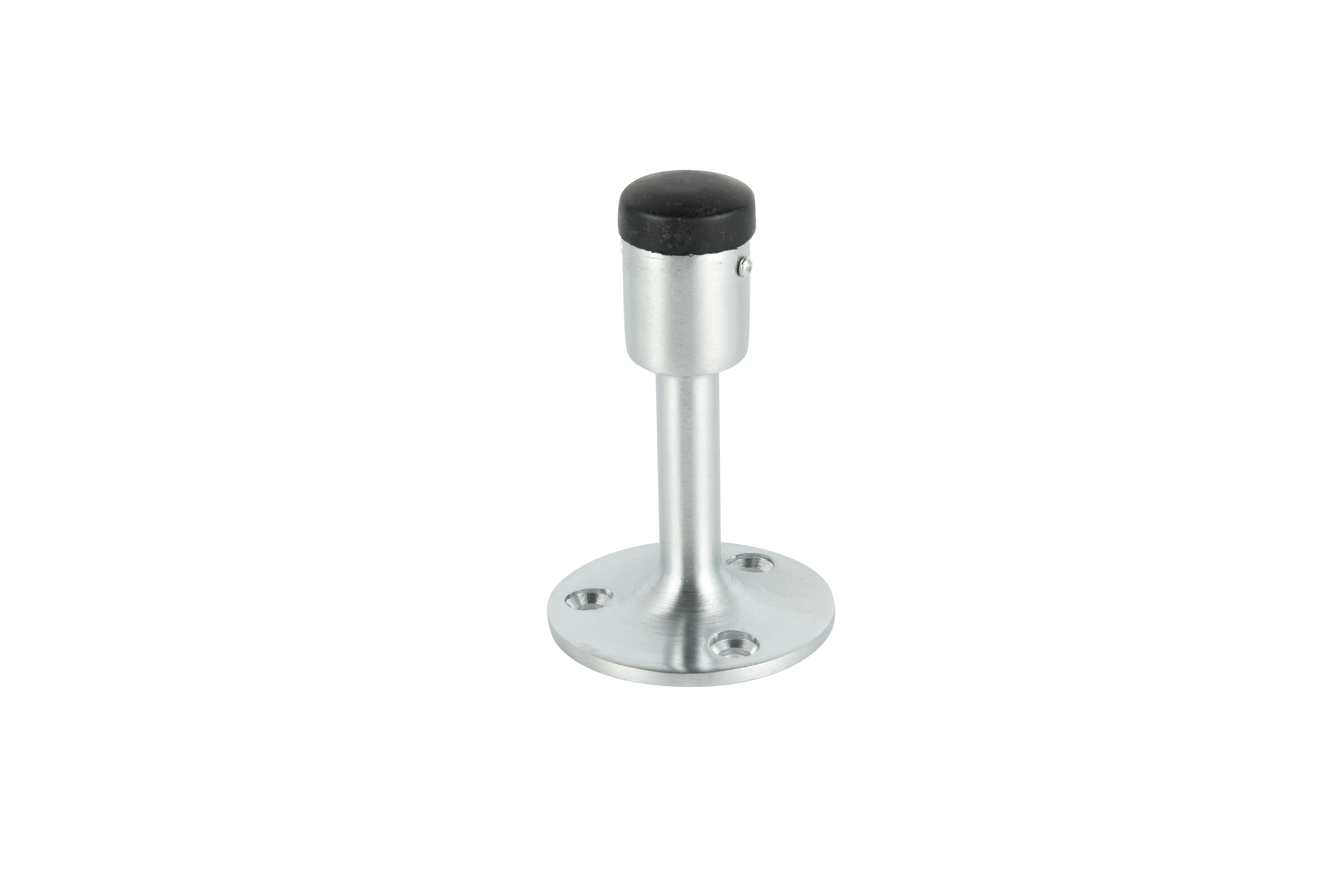
Floor-mounted door stops are the most common type. As the name suggests, these are placed directly on the floor and are typically used for heavier doors or doors that need a more robust solution. The position of a floor-mounted door stop is critical, as it must be placed in the door’s swing path to prevent damage to walls or furniture.
● Heavy doors: Floor-mounted door stops are ideal for heavy doors that may cause damage due to excessive force. The weight of the door ensures the door stop stays in place, offering effective protection.
● High-traffic areas: In commercial or high-traffic areas, floor-mounted door stops provide sturdy protection without taking up wall space.
● Close to the door’s edge: To ensure effective performance, place the stop near the bottom edge of the door, where the door is most likely to swing.
Advantages | Disadvantages |
Provides robust protection | Requires drilling into the floor |
Suitable for heavy doors | Can create tripping hazards |
Sturdy and reliable | May not be ideal for some flooring types |
Wall-mounted door stops are usually installed on the baseboard or wall behind the door. They are designed to stop the door handle or edge from hitting the wall, preventing potential damage. Wall-mounted door stops are often used in homes with lighter doors or spaces with limited floor space.
● Near the door handle: For effective protection, install the wall stop at the height of the door handle. This ensures the door handle doesn’t hit the wall.
● Spaces with limited floor space: Wall-mounted door stops are ideal for rooms with limited floor space, such as smaller rooms or hallways.
● To protect walls: Wall-mounted stops are perfect for safeguarding walls from damage in high-traffic areas.
Advantages | Disadvantages |
Saves floor space | Requires drilling into the wall |
Works well with lighter doors | Not as effective for heavy doors |
Easy to install | May not provide enough resistance for frequent use |
Wedge door stops are simple devices made from rubber, wood, or plastic. These wedge-shaped devices are placed under the door to either hold it open or prevent it from swinging too far. They work based on gravity and friction, making them easy to use and reposition.
● Temporary use: Wedge door stops are perfect for temporary use or when you need to hold a door open while carrying items.
● Light doors: These are best for lighter doors that don’t require heavy-duty solutions. They are ideal for occasional use and can be moved as needed.
Advantages | Disadvantages |
Portable and easy to use | Can be moved easily, not permanent |
No installation required | Less effective for heavier doors |
Affordable | Can slide out of place easily |
Magnetic door stops offer a convenient solution for preventing doors from swinging too far. These stops use a magnetic ring on the door and a metal counterpart on the wall or floor. When the door reaches a certain angle, the magnets engage, holding the door securely in place.
● Prevent door slamming: Magnetic door stops are perfect for preventing doors from slamming shut due to drafts or carelessness.
● Holding doors open: In windy environments, these stops keep doors open without the need for constant manual adjustment.
Advantages | Disadvantages |
Convenient and easy to install | May not provide enough resistance for heavy doors |
Discreet and functional | Requires proper placement for magnets to engage |
Keeps doors open securely | Can be more expensive than other options |
Door stops are small but powerful devices that protect your walls, furniture, and doors from damage. Installing them in the right location ensures both safety and convenience. Whether you choose a floor-mounted, wall-mounted, wedge, or magnetic model, each type offers unique benefits. At Ningbo Tongyi Metal Products Co., Ltd., we provide high-quality door stops designed for durability and performance. Our products cater to residential, commercial, and industrial needs, ensuring your space is both protected and aesthetically appealing.
A: The best place to install a door stop depends on the door type; floor-mounted for heavy doors and wall-mounted for lighter ones.
A: Choose a location based on your door's swing range and available space. Floor-mounted door stops are ideal for heavy doors, while wall-mounted ones save space.
A: Installing a door stop prevents damage to walls, furniture, and the door itself, especially in high-traffic areas.
A: To install a wall-mounted door stop, simply drill the appropriate holes at door handle height, then mount the stop securely.
A: Yes, wall-mounted door stops are ideal for small rooms as they don’t take up floor space and protect walls from door impacts.
A: Floor-mounted door stops are best for high-traffic areas, as they provide sturdy protection for doors that are frequently opened.