
Views: 0 Author: Site Editor Publish Time: 2026-07-31 Origin: Site


Commercial and high-end residential design often prioritizes aesthetic appeal over long-term mechanical viability. This oversight leads directly to escalating facility management costs. Project teams select visually striking components without evaluating internal mechanics. These decisions create significant downstream problems. Premature hardware failure impacts daily operations. It introduces severe security vulnerabilities across the facility. Compliance violations arise when life-safety components degrade unexpectedly. Maintenance teams waste excessive hours on preventive adjustments and emergency repairs. A technical evaluation framework solves these operational challenges. Specifying Architectural Hardware requires balancing initial design intent with lifecycle maintainability. You must consider end-user safety and daily mechanical stress. Proper specification reduces long-term replacement cycles. It ensures components withstand their intended environmental conditions. Facility managers gain predictable maintenance schedules. Building owners avoid the operational drain of constant hardware retrofits.
Lifecycle Over Initial Cost: Lifecycle expenses for architectural hardware are dictated heavily by preventive maintenance frequency and replacement cycles, not just procurement price.
Application-Specific Grading: Specifying the correct ANSI/BHMA grade (Grade 1 for high-use commercial, Grade 2 for light commercial/residential) is the baseline for mitigating mechanical wear and tear.
The Hardware Schedule as an Asset: A meticulously compiled door hardware schedule serves as the foundation for the building’s ongoing preventive maintenance and parts-replacement strategy.
Environmental and Energy Context: Sector risks (e.g., healthcare sanitation protocols, coastal salt exposure) and energy-efficiency demands (thermal performance, draft exclusion) must drive material and component selection.
Compliance and Automation Integration: Modern specification requires aligning manual hardware tolerances with automated access control systems, ADA standards, and life-safety codes to avoid costly retrofits.
A successful specification goes beyond matching door finishes. It requires zero compliance failures over the building lifecycle. Maintenance schedules must remain predictable and manageable. Aesthetic integrity should sustain itself for over ten years. Facility teams need reliable components that resist daily abuse. When hardware fails, it compromises building security and occupant safety. Success means the hardware operates flawlessly without constant human intervention. You evaluate success through reduced repair tickets and sustained mechanical performance. We look for specific indicators when auditing a building's hardware package.
The door latches securely every time it closes without requiring a secondary push or pull.
The closer controls the door swing smoothly, preventing slamming while ensuring full closure.
Hinges remain tightly fastened to the frame and door edge, showing no signs of metal dust or sagging.
Key cylinders operate smoothly without binding or requiring excessive force to turn.
Exit devices retract the latch completely when the push pad is depressed halfway.
Complex or improperly specified hardware exponentially increases maintenance overhead. Facilities teams spend countless hours on basic lubrication tasks. Tension adjustments on door closers become a weekly requirement. Realignment of sagging hinges drains labor resources. Furniture Hardware with weak internal springs requires frequent replacement. Heavy-duty drawer slides fail under improper load calculations. Each failure pulls maintenance staff away from critical building operations. The labor cost of continuous repairs quickly eclipses the initial purchase price. When you hang a 250-pound solid core wood door, the hinges take a massive lateral load. If you specify standard-weight hinges instead of heavy-weight, ball-bearing hinges, the door will sag. The top hinge will pull away from the frame. The latch will stop aligning with the strike plate. The facility manager then spends hours routing out the frame, installing longer screws, and adjusting the strike.
A detailed hardware schedule serves as a vital maintenance blueprint. It lists specific hardware products for every single door opening. This document facilitates future maintenance tracking and component identification. Facilities teams use it to standardize their parts stocking strategy. You avoid guessing which replacement cylinder or hinge matches a specific door. The schedule outlines exact manufacturer codes, finishes, and mechanical functions. It transforms a static construction document into a dynamic facility management tool. A proper schedule includes the door number, handing, fire rating, and a complete breakdown of every component installed on that opening.
Sample Door Hardware Schedule Extract | ||||
Heading | Qty | Description | Manufacturer | Finish |
|---|---|---|---|---|
HW-01 | 3 | Hinge, Heavy Weight Ball Bearing | Brand A | US26D |
HW-01 | 1 | Mortise Lock, Classroom Function | Brand B | US26D |
HW-01 | 1 | Surface Closer, Heavy Duty | Brand C | ALUM |
HW-01 | 1 | Kick Plate, 10" x 34" | Brand D | US32D |
HW-01 | 1 | Wall Stop, Convex | Brand E | US26D |
Architects and facility managers often have conflicting hardware priorities. Architects focus heavily on visual integration and spatial aesthetics. They want hardware that blends seamlessly into the design language. Facility managers prioritize mechanical durability and easy access to internal mechanics. They need components that are simple to repair and maintain. Bridging this gap requires compromise and technical understanding. You must select hardware that satisfies aesthetic requirements while housing heavy-duty internal mechanisms. Open communication during the specification phase prevents costly post-installation conflicts. We often see architects specify concealed floor closers for their clean look. Facility managers hate them because adjusting the sweep speed requires pulling up the threshold and dealing with dirt and water ingress.
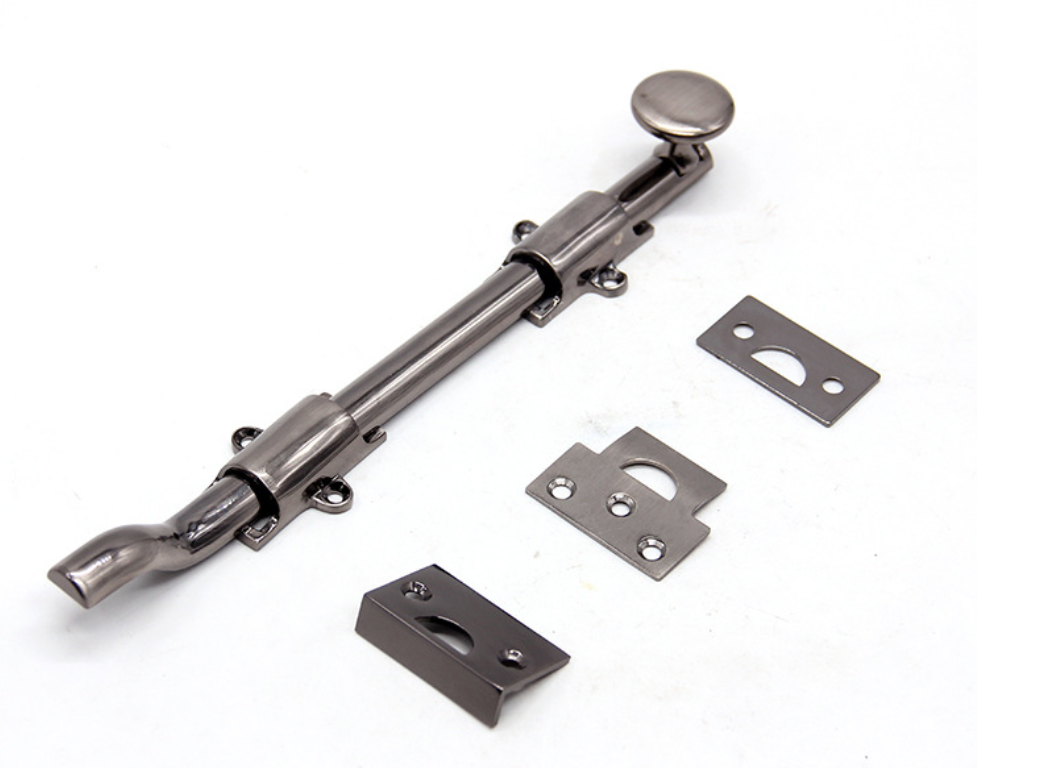
Hardware categorization must rely on expected use rather than product type. High-traffic commercial environments demand extreme mechanical resilience. Commercial door hardware often endures millions of operational cycles. Residential applications might only see a few thousand cycles annually. These cycle expectations dictate the required internal component materials. Commercial locks utilize cast steel and solid brass internals. Residential locks often rely on stamped metal and plastic components. Specifying residential-grade hardware in a commercial space guarantees rapid mechanical failure. If you install a tubular lock on a high-traffic cross-corridor door, the latch bolt will shear off within six months. The internal return springs will snap. The lever will droop. You must match the internal engineering to the expected daily cycle count.
Distinct maintenance profiles exist across different hardware categories. Door Hardware requires rigorous mechanical and life-safety maintenance. Door closers need seasonal fluid and tension adjustments. Panic bars demand regular latch retraction testing. Hinges require periodic pin lubrication to prevent metal fatigue. Furniture hardware focuses more on load-bearing and finish maintenance. Cabinet pulls endure constant skin contact and require durable plating. Heavy-duty drawer slides need track cleaning and ball-bearing lubrication. Understanding these distinct profiles helps tailor your preventive maintenance plans. You do not maintain a mortise lock the same way you maintain a drawer slide. The mortise lock requires dry graphite in the cylinder and lithium grease on the latch bolt. The drawer slide requires wiping down the tracks to remove dust buildup that binds the bearings.
Different sectors impose unique functional stresses on hardware components. Healthcare facilities utilize harsh chemical cleaners for sanitation. These chemicals rapidly degrade standard clear coats and antimicrobial finishes. Behavioral health units require specialized anti-ligature hardware for patient safety. Educational institutions represent high-abuse environments. They require heavy-duty vandal-resistant designs like slip-clutch levers. Acoustic environments demand strict maintenance of perimeter gasketing and drop seals. Coastal exteriors require extreme corrosion resistance. You must specify 316 marine-grade stainless steel rather than standard 304 stainless. We see standard 304 stainless steel pit and rust within three months on coastal properties. The salt air attacks the microscopic iron deposits on the surface. Upgrading to 316 stainless steel adds molybdenum, which drastically increases corrosion resistance.
Sector-Specific Hardware Requirements | |||
Sector | Primary Environmental Stress | Required Hardware Feature | Maintenance Focus |
|---|---|---|---|
Healthcare | Harsh chemical cleaners, high traffic | Antimicrobial coatings, hospital latches | Finish inspection, latch lubrication |
Education | Vandalism, extreme physical abuse | Slip-clutch levers, heavy-duty closers | Through-bolt tightening, closer adjustment |
Coastal / Exterior | Saltwater spray, high humidity | 316 Stainless Steel, sealed bearings | Rust removal, weatherstrip replacement |
Behavioral Health | Patient safety, ligature risks | Sloped surfaces, concealed fasteners | Tamper-resistant screw checks |
Base metals dictate the long-term survival of any hardware component. Solid brass and bronze offer excellent structural integrity. They age through a natural patina process rather than destructive corrosion. Stainless steel provides superior strength and rust resistance in harsh environments. Zinc alloys offer cost savings but degrade faster under heavy use. Finish maintainability is equally critical. Physical Vapor Deposition (PVD) finishes resist scratching and chemical wear exceptionally well. Powder coating provides a durable, thick barrier against moisture. Standard electroplating often chips and flakes under daily physical impact. When a plated finish chips, it exposes the base metal to moisture. This leads to galvanic corrosion if the base metal and the plating are dissimilar. PVD bonds at the molecular level, preventing this flaking entirely.
Concealed hardware introduces significant maintenance burdens. Concealed floor closers require floor excavation for basic adjustments. Concealed hinges demand precise routing and complicate door removal. Surface-mounted alternatives offer immediate access for rapid servicing. You must calculate the labor-hour metrics for standard preventive tasks. Hinge lubrication should take minutes, not hours. Latch bolt adjustments require easily accessible set screws. Closer tension calibration needs clear, marked adjustment valves. Complex hardware designs inflate these standard maintenance times unacceptably. If a maintenance technician has to remove the door from the frame just to adjust the closing speed, the hardware is improperly specified for a commercial environment.
Inspect the door closer for fluid leaks around the pinion shaft.
Adjust the sweep speed valve to ensure a smooth closing motion.
Adjust the latch speed valve to ensure the door secures without slamming.
Check the backcheck valve to prevent the door from hitting the adjacent wall.
Verify all mounting screws are tight and the arm is securely fastened to the frame.
Energy-efficient hardware preserves interior climate controls and reduces utility costs. Thermal break thresholds prevent temperature transfer beneath exterior doors. High-quality weatherstripping blocks draft infiltration and moisture penetration. Low-energy automatic operators maintain the thermal envelope by minimizing open times. You must inspect perimeter gasketing regularly for tears and compression loss. Drop seals require seasonal height adjustments to maintain floor contact. Failing to maintain these components compromises the building's overall HVAC efficiency. A torn door sweep allows cold air to flood the lobby. The heating system works overtime to compensate. Replacing a simple neoprene sweep saves significant energy over the winter months.
ANSI/BHMA grading predicts maintenance needs and structural durability. Grade 1 hardware withstands the highest cycle counts and physical abuse. It is mandatory for heavy commercial and institutional applications. Grade 2 suits light commercial and standard residential environments. Independent testing verifies these cycle life and operational force claims. Specifying certified hardware guarantees a baseline of mechanical performance. It protects building owners from substandard imported components. Always demand testing documentation when evaluating new hardware manufacturers. The testing protocols are brutal. A Grade 1 mortise lock must survive one million cycles. A Grade 1 door closer must survive two million cycles. If the hardware lacks this certification, you are gambling with the building's operational stability.
Calculating the true value of hardware spans a 15-25 year building lifecycle. Initial procurement represents only a fraction of the total expense. Installation labor adds significant upfront costs. Annual maintenance hours multiply rapidly over two decades. Projected replacement frequency factors into the long-term operational model. You must weigh these conceptual trade-offs during the design phase. Spending more on robust mechanics initially saves thousands in future labor. A comprehensive lifecycle analysis exposes the hidden labor costs of cheap hardware. You pay for the hardware once, but you pay the maintenance technician every time they touch the door.
Financial trade-offs define the specification process. Specifying cheaper Grade 2 hardware in a Grade 1 environment is a critical error. The initial savings disappear within the first two years. Higher labor costs for continuous repairs drain facility budgets. Frequent adjustments frustrate occupants and maintenance staff. Premature replacement requires buying new hardware and paying for installation twice. Investing in Grade 1 components drastically reduces these long-term maintenance costs. It provides a stable, predictable operational budget. We track repair tickets in commercial office buildings. Doors with Grade 2 hardware generate five times as many repair requests as doors with Grade 1 hardware.
Standard manufacturer warranties contain strict owner responsibilities. Manufacturers explicitly require documented maintenance logs to keep warranties valid. You must prove that you performed routine lubrication and adjustments. Improper maintenance immediately voids these manufacturer warranties. Using incorrect lubricants attracts dirt and destroys internal gears. Abrasive chemical cleaners strip protective finishes and invite corrosion. Facility managers must train staff on approved maintenance procedures. Protecting the warranty protects the building's operational investment. Never use WD-40 on a lock cylinder. It attracts dust and creates a sticky sludge that seizes the pins. Always use a dry graphite or Teflon-based lubricant.
Integrating mechanical hardware with automated access control introduces severe risks. Electric strikes and electrified mortise locks require precise installation tolerances. Misaligned doors cause automated latches to bind and fail. You must specify exact voltage requirements during the design phase. Wiring pathways need clear documentation to prevent pinched cables. Fail-safe and fail-secure parameters must align with fire codes. Improper integration leads to frequent motor burnout and security breaches. Detailed coordination between hardware installers and security integrators mitigates these risks. If the door sags by an eighth of an inch, the electric strike will bind against the latch. The solenoid will overheat and burn out when someone presents their badge.
Failing life-safety and accessibility inspections creates massive legal liabilities. Improper specification leads directly to compliance failures. You must mandate strict adherence to optimal handle heights. Acceptable opening force limits usually cap at 5 lbs for interior doors. Fire-rating compatibility requires specific latching mechanisms and closer types. Non-compliant hardware creates accessibility barriers for disabled occupants. Retrofitting non-compliant doors disrupts building operations and incurs heavy costs. Thorough code review during specification prevents these expensive implementation failures. You cannot install a deadbolt on a fire-rated stairwell door if it prevents single-motion egress. The fire marshal will fail the inspection immediately.
Certified Architectural Hardware Consultants (AHCs) provide critical technical oversight. They audit and certify hardware schedules before procurement begins. AHCs ensure strict code compliance across all door openings. They perform detailed post-installation inspections to verify proper operation. Their expertise aligns product selection with actual facility maintenance capabilities. Engaging an AHC reduces specification errors and installation defects. They bridge the knowledge gap between architects, contractors, and facility managers. Their involvement guarantees a functional, compliant, and maintainable hardware package. They catch the small details, like ensuring the wall stop is long enough to clear the lever handle before the door hits the drywall.
Audit your current hardware specification templates to remove outdated or underperforming components.
Consult with a certified AHC for upcoming projects to ensure code compliance and mechanical suitability.
Convert your static door hardware schedules into digital, trackable maintenance assets for your facilities team.
Establish a strict baseline preventive maintenance schedule for all newly installed hardware.
A: High-traffic commercial doors require quarterly visual inspections. You should check for loose screws, sagging hinges, and finish wear. Bi-annual mechanical servicing is necessary for door closers, panic hardware, and electrified locks. Life-safety codes often mandate annual documented inspections for fire-rated door assemblies.
A: Higher grades, such as ANSI/BHMA Grade 1, are tested for millions of operational cycles. This robust construction drastically reduces the frequency of component failure. Grade 1 hardware requires fewer tension adjustments and less frequent lubrication compared to lower-grade alternatives.
A: Architectural hardware is custom-specified, highly durable, and strictly code-compliant. It is designed for heavy commercial use and long-term maintainability. Standard builder's hardware is mass-produced, features lower cycle ratings, and is typically intended for light residential applications where mechanical stress is minimal.
A: You evaluate lifecycle value by combining the initial purchase price and installation labor with projected maintenance costs. Factor in the annual maintenance hours multiplied by the labor rate over the expected lifespan. Finally, add any projected replacement costs for components that will not survive the building's lifecycle.
A: Finishes dictate how well hardware withstands daily human contact and cleaning agents. Advanced finishes like PVD resist scratching and chemical degradation far better than standard electroplating. This durability reduces the need for frequent replacement in high-touch applications.
A: Non-compliant hardware creates severe accessibility barriers for building occupants. Hardware requiring tight grasping, pinching, or excessive force violates federal guidelines. This non-compliance exposes building owners to severe legal liabilities, failed inspections, and mandatory, expensive retrofit projects.
A: Properly specified hardware maintains the building's thermal envelope. High-quality weatherstripping, perimeter gasketing, and thermal break thresholds prevent exterior air infiltration. Automatic door closers ensure doors latch securely, minimizing HVAC loss and reducing overall facility energy consumption.