
Views: 0 Author: Site Editor Publish Time: 2026-10-31 Origin: Site


High-quality brass hardware represents a significant architectural investment. Unfortunately, environmental exposure and heavy usage rapidly degrade its aesthetic appeal. They also compromise mechanical integrity over time. Effective maintenance extends asset lifespan tremendously. It prevents mechanical failure in critical traffic areas. It also delays costly replacement cycles for your facilities.
This guide provides an evidence-based maintenance framework for preserving brass hardware. We place a specific focus on mechanical components. You will learn exact protocols to clean and lubricate these items properly. We will show you how to identify finishes correctly. You will also discover when to restore parts versus when to replace them entirely. Maintaining these components ensures building safety and preserves your original design intent.
Finish dictates the method: Maintenance protocols must align with whether the brass is lacquered, unlacquered (living finish), or PVD-coated.
Mechanical integrity equals safety: Surface cleaning must be paired with mechanical lubrication, especially for heavy duty door holders that manage structural load.
Proactive over reactive: Routine, non-abrasive cleaning prevents the deep pitting and corrosion that force premature hardware replacement.
Replacement logic: Hardware should be replaced when mechanical wear compromises fire compliance or structural integrity, not just due to surface tarnishing.
Commercial hardware takes relentless abuse daily. Facility managers often overlook routine maintenance for these fixtures. However, the cost of neglect far outweighs the minimal time required for upkeep. Replacing entire suites of commercial hardware demands a massive capital expense. Routine care requires only basic supplies and a consistent schedule. You save significant budget dollars by keeping existing fixtures operational.
Aesthetic continuity also plays a major role in facility management. Unmaintained hardware creates an inconsistent visual experience. High-end residential and commercial environments rely on cohesive design. Guests and tenants notice tarnished, peeling plates immediately. It signals poor facility management. Maintaining a uniform appearance across all floors protects the reputation of the property.
Compliance and safety remain the most critical factors. You cannot ignore the mechanical components of your doors. Failing to maintain a heavy duty door holder can lead to dangerous situations. Doors may not function as designed. Heavy doors might slam shut unexpectedly. This failure potentially violates local fire codes. It can also breach ADA (Americans with Disabilities Act) requirements. These regulations mandate specific closing forces and clearance times. Proper maintenance guarantees your doors operate within legal safety parameters.
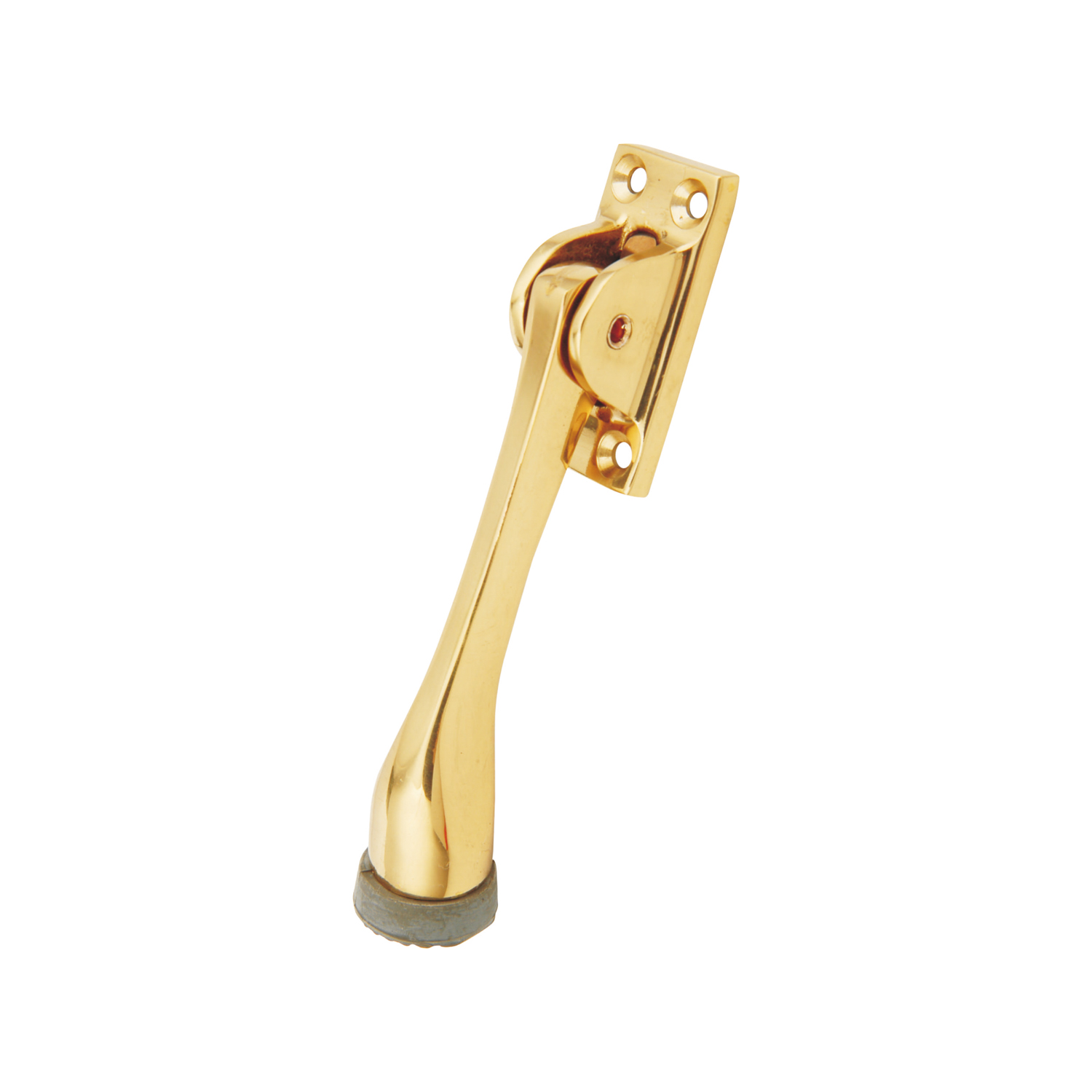
You must identify the exact finish before applying any cleaning agents. Applying the wrong chemical will ruin the hardware permanently. Facility teams must perform a visual and physical inspection first.
Lacquered brass features a shiny, uniform appearance. Manufacturers apply a clear coat to protect the raw metal. This coating blocks oxygen and prevents tarnishing entirely. However, it remains highly susceptible to scratching. Keys, rings, and abrasive pads easily breach this barrier. Chemical stripping also destroys the coating rapidly. Once the lacquer breaches, localized tarnishing occurs fast. You will see dark spiderweb patterns forming under the clear coat.
Unlacquered brass lacks a protective clear coat. We often call this a living finish. It is designed to patina naturally over time. Oxidation darkens the metal. Oils from human contact accelerate this process in high-touch areas. It requires periodic polishing if you desire a bright finish. Many architects prefer the aged look. You must avoid harsh chemicals here. Strong solvents will strip the organic patina unevenly. This leaves the hardware looking splotchy and damaged.
PVD represents the peak of modern finish technology. Manufacturers bond the finish to the metal at a molecular level. It provides a highly durable, tarnish-resistant surface. You will find it common in modern architectural hardware. It withstands coastal salt air and heavy chemical exposure well. While highly resistant to wear, you can still damage it. Highly abrasive scouring pads will scratch the surface.
Finish Type | Visual Characteristics | Primary Vulnerabilities | Maintenance Approach |
|---|---|---|---|
Lacquered Brass | High gloss, perfectly uniform color, smooth texture. | Scratches easily; peels if moisture penetrates. | Mild soap only. Never polish. |
Unlacquered Brass | Developing patina, darker areas where touched frequently. | Uneven oxidation; spotting from acidic liquids. | Periodic polishing or gentle dusting. |
PVD Brass | Consistent color, resembles lacquer but feels harder. | Abrasive mechanical damage (scratches). | Mild soap only. Highly resistant to chemicals. |
Developing a standardized protocol prevents accidental damage by janitorial staff. You must combine surface cleaning with mechanical lubrication. This two-part approach ensures both visual appeal and operational safety.
Daily or weekly cleaning requires a gentle touch. You do not need industrial chemicals. Follow these exact steps for the best results:
Mix a solution of mild dish soap and warm water.
Dip a clean microfiber cloth into the solution. Wring it out well.
Wipe down the surface gently to remove dirt and finger oils.
Rinse the hardware using a separate cloth dampened with plain water.
Dry the fixture completely using a dry microfiber towel.
Avoid acidic cleaners entirely on lacquered finishes. Vinegar, lemon juice, and harsh detergents will strip the protective coat. Moisture trapped against the metal causes rapid deterioration.
If your facility standards require bright, shiny metal, you must polish unlacquered fixtures. Select a specialized commercial brass polish. Apply the polish using a soft, lint-free cloth. You must work in straight lines. Align your strokes with the natural grain of the metal. Do not use circular motions. Circular rubbing creates visible micro-abrasions. These scratches dull the finish over time. Once you remove the tarnish, buff the surface with a clean cloth. This removes any residual polishing compound.
Cleaning the outside solves only half the problem. You must address the moving parts of your Brass Door Holders to ensure safety. Plungers, internal springs, and hinges require regular lubrication. Liquid cleaners often wash away factory grease.
Apply a dry PTFE (Teflon) or graphite lubricant directly to the mechanisms. Work the mechanism back and forth to distribute the lubricant. Avoid heavy petroleum greases. Wet greases attract dust, dirt, and floor grit. This mixture forms a destructive paste. It accelerates mechanical wear and destroys internal springs prematurely.
Even well-intentioned maintenance teams make critical errors. You must train your staff to avoid these common pitfalls. Proper education prevents catastrophic damage to your architectural investments.
Many cleaning crews reach for steel wool or abrasive sponges to remove stubborn grime. This is a fatal mistake for lacquered and PVD brass. Abrasives will permanently scratch the surface. Furthermore, steel wool leaves behind microscopic iron fibers. These fibers embed themselves in the brass. They rust quickly upon exposure to humidity. This creates unsightly brown spots that look like the brass itself is rusting.
Not all hardware is solid brass. Many commercial buildings use brass-plated steel or zinc to cut initial costs. Excessive polishing on plated brass ruins the fixture. The abrasive compounds in polish slowly remove the micro-thin brass layer. You will eventually expose the silver-colored base metal beneath. Once this happens, you cannot restore the finish. You must replace the entire unit.
Your building's geographic location dictates your maintenance schedule. Hardware exposed to coastal air faces constant salt bombardment. Salt triggers aggressive galvanic corrosion. Industrial environments expose metal to airborne chemical pollutants. You must implement high-frequency maintenance cycles in these zones. Wipe down exterior fixtures weekly. Apply protective micro-crystalline wax to unlacquered outdoor components. This provides a temporary barrier against harsh elements.
Cosmetic cleaning often masks underlying mechanical failure. Janitors clean the exterior while ignoring stiffness in the mechanism. If you feel grinding when operating a door stop, you have a problem. Ignoring this stiffness in the heavy duty door holder mechanism leads to eventual structural failure. The internal friction plates or springs will snap. When they fail, the door loses its structural control. Always test the mechanical action during routine cleaning.
Every maintenance team faces the repair-versus-replace dilemma. You need a clear framework to make cost-effective decisions. Throwing away good hardware wastes money. Keeping dangerous hardware invites liability.
You should restore hardware when the issue remains purely cosmetic. Heavy tarnish or an uneven patina on solid brass easily resolves with polish. Peeling lacquer on solid brass looks terrible, but you can fix it. You can chemically strip the remaining clear coat. Then, you can polish the raw brass back to a high shine. You might choose to leave it unlacquered thereafter.
Most importantly, you should restore when internal mechanisms still operate smoothly. If the springs compress without binding, keep the unit. If the hinges swing without grinding, the asset still holds value.
You must replace hardware when it fails critical safety or aesthetic checks. Use these shortlisting criteria to audit your facilities:
Mechanical Failure: The internal springs snap. The friction mechanisms of the door holder no longer sustain the door's weight. The door drifts shut despite the holder being engaged.
Base Metal Exposure: On plated hardware, the brass finish has worn through completely. Silver or gray patches dominate the visual surface.
Bent or Warped Components: Structural impacts from heavy carts or violent door swings have warped the mounting plates. The unit no longer sits flush against the wall or floor.
When you decide to replace a failing unit, choose your upgrades wisely. Evaluate solid brass over plated alternatives for longevity. Solid brass withstands impacts better. It never exposes a different base metal. Consider PVD finishes for high-traffic or exterior applications. They reduce future maintenance overhead significantly.
If you need a robust solution, an architectural door holder made of solid brass offers superior ROI. It handles commercial traffic loads effortlessly. The upfront price is higher. However, it outlasts cheaper alternatives by decades. This eliminates repeated installation labor costs.
Proper maintenance of brass hardware requires a strategic, informed approach. You must correctly identify the finish before applying any cleaning agents. Adhering to non-destructive, mild cleaning methods protects the protective coatings. You must also ensure mechanical parts remain properly lubricated with dry PTFE or graphite. This guarantees doors function safely and smoothly.
Take proactive steps today to preserve your architectural hardware:
Audit your current hardware finishes across the facility to categorize them accurately.
Establish a routine, non-abrasive maintenance schedule with your facilities team.
Train staff on the differences between lacquered, living, and PVD finishes.
Evaluate any failing heavy duty components immediately.
Replace compromised units with higher-grade, solid brass architectural options for long-term reliability.
A: Unlacquered solid brass in high-touch areas may require monthly polishing if a bright finish is desired. Lacquered or PVD hardware should never be polished, only cleaned with mild soap. Abrasive polishes will permanently destroy clear coats and PVD layers.
A: Yes, solid unlacquered brass can be restored with commercial brass polish. Lacquered brass that is flaking must have the clear coat chemically stripped before it can be polished and re-lacquered. Plated brass cannot be restored if the base metal is exposed.
A: Liquid cleaners may have penetrated the mechanical housing, washing away existing lubrication or introducing debris. Always apply a dry lubricant to moving parts after liquid cleaning. Avoid petroleum greases, which attract dirt and cause future mechanical binding.
A: Yes. Solid architectural door holders withstand heavy impacts and frequent polishing without exposing a secondary base metal, offering a significantly higher long-term return on investment despite the higher initial purchase price.